The cloud kitchen revolution has fundamentally changed how food businesses are built, scaled, and experienced. What once required large dine-in spaces, heavy front-end investments, and years of brand-building can now be achieved through delivery-first models that focus entirely on food quality, speed, and consistency. However, while the barriers to entry are lower, the barriers to long-term success have never been higher.
In a market crowded with new virtual restaurants launching every day, only a handful of cloud kitchens manage to grow sustainably. Many fail within the first year—not because the food lacked potential, but because the business lacked structure. The defining difference between a short-lived kitchen and a scalable, profitable operation is rarely marketing spend or menu innovation alone. It is the presence of a food brand with strong SOPs.
Standard Operating Procedures, commonly known as SOPs, form the invisible foundation of every high-performing cloud kitchen. They ensure that quality is repeatable, operations are predictable, and growth does not dilute the brand promise. As customer expectations rise and competition intensifies, SOPs are no longer operational documentation—they are strategic assets.
India’s cloud kitchen ecosystem has matured rapidly. Customers today expect restaurant-quality food delivered quickly, safely, and consistently, regardless of location or order volume. Food delivery platforms have also evolved, prioritizing brands that can demonstrate operational reliability, low complaint rates, and scalability.
This shift has exposed a critical truth: creativity and good recipes may help a kitchen launch, but systems and SOPs determine whether it survives and scales.
A cloud kitchen without strong SOPs often depends heavily on individual chefs, informal processes, and reactive decision-making. While this approach may work temporarily, it quickly breaks down during peak demand, staff turnover, or expansion to new locations. In contrast, a food brand with strong SOPs operates like a well-oiled machine, where outcomes are driven by processes rather than people alone.
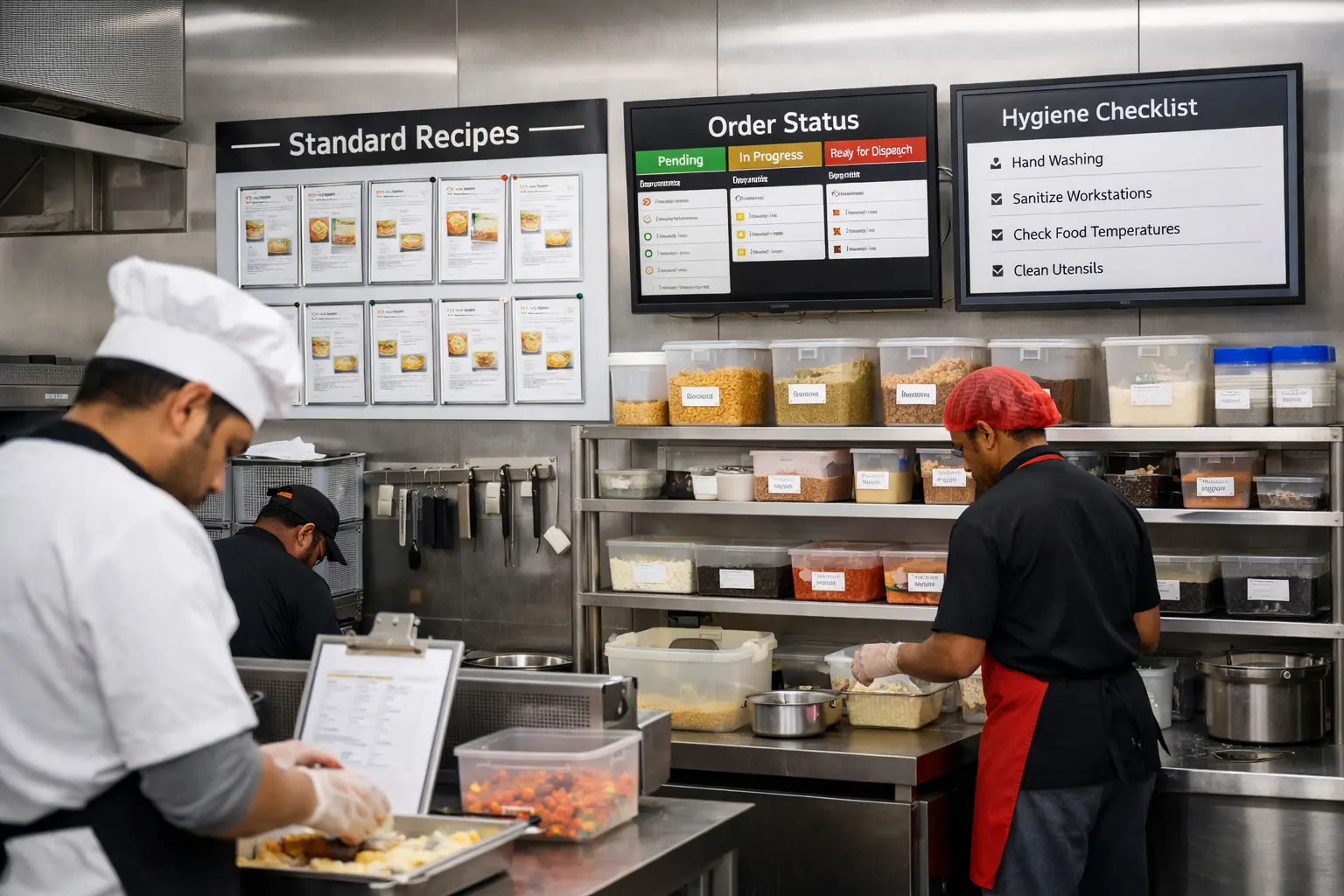
SOPs are often misunderstood as rigid rulebooks that restrict creativity. In reality, effective SOPs do the opposite—they create freedom by eliminating uncertainty. In a cloud kitchen environment, SOPs clearly define how every aspect of the business functions, from ingredient sourcing to food preparation, hygiene, packaging, dispatch, and customer feedback handling.
For a food brand with strong SOPs, every dish has a clearly defined recipe, every ingredient has an approved supplier, every cooking process has exact time and temperature controls, and every order follows a standardized dispatch flow. This level of clarity ensures that even during high-pressure situations, execution remains consistent.
More importantly, SOPs transform food operations from a skill-dependent activity into a system-driven business. This shift is what enables scale.
In the delivery-first food ecosystem, customers never see the kitchen. Their entire perception of a brand is shaped by what arrives at their doorstep. A single inconsistent experience—whether it’s taste variation, poor packaging, or delayed delivery—can permanently damage trust.
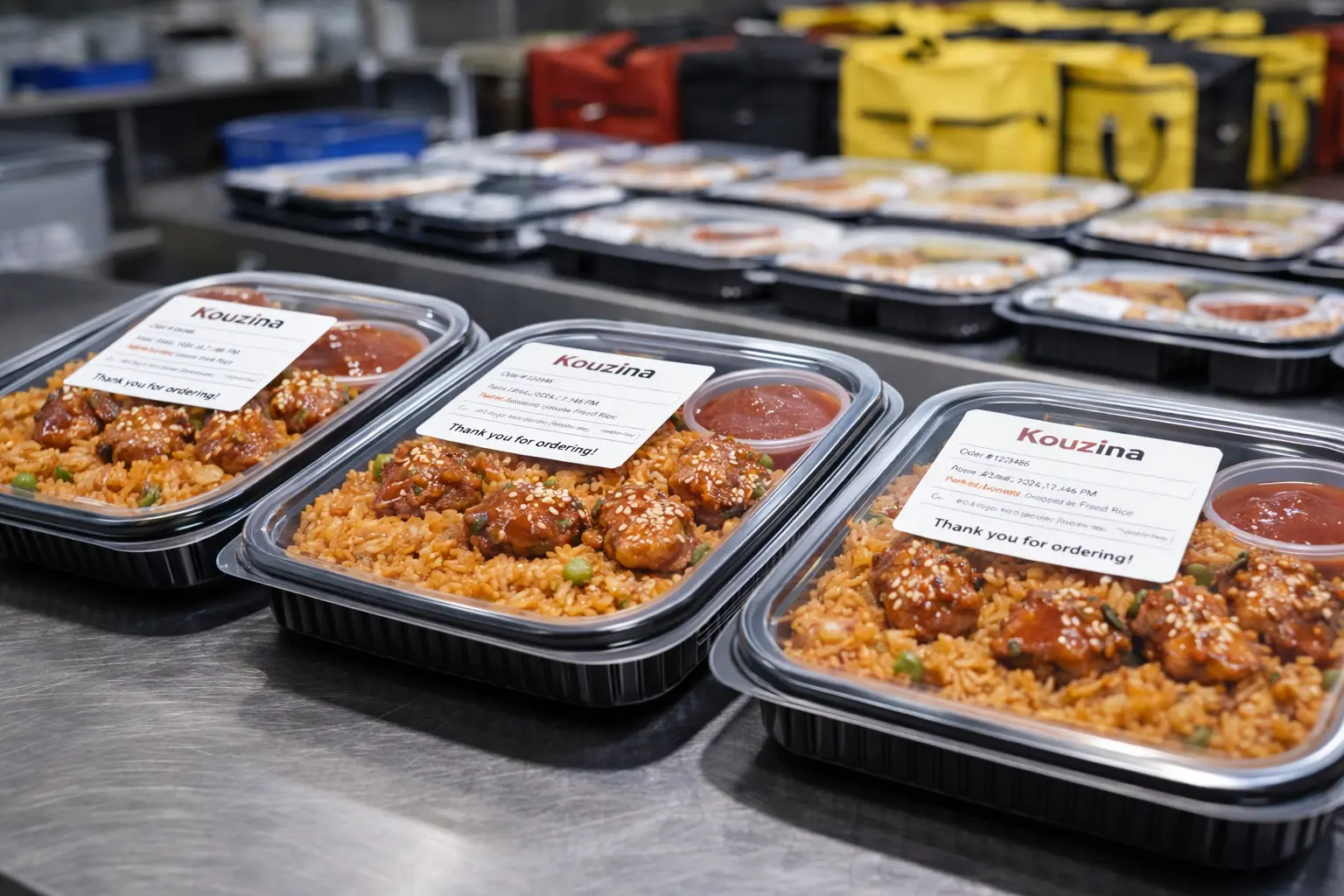
A food brand with strong SOPs eliminates this risk by ensuring that every order meets the same standards, regardless of who prepares it or where it is made. Consistency in taste, portion size, presentation, and packaging builds familiarity. Familiarity builds trust. And trust drives repeat orders.
Over time, this consistency compounds into stronger brand equity, higher customer lifetime value, and better ratings across delivery platforms.
Scaling a cloud kitchen is not simply about opening more locations. It is about replicating success without increasing risk. This is where many food businesses struggle. Processes that work for one kitchen often fail when duplicated across multiple locations due to lack of standardization.
A food brand with strong SOPs, however, is designed for replication. SOPs act as a blueprint that allows the same operational model to be deployed across cities, kitchens, and teams. Training becomes faster, onboarding becomes simpler, and performance becomes predictable.
This scalability is not theoretical. It is proven every day by large cloud kitchen operators that run dozens—or even hundreds—of kitchens while maintaining consistent quality. Their advantage lies not in having better chefs, but in having better systems.
Operational excellence in cloud kitchens is defined by efficiency, accuracy, and reliability. SOPs enable all three.
When recipes are standardized, ingredient usage becomes predictable. When cooking processes are defined, preparation time becomes consistent. When hygiene protocols are enforced, food safety risks are minimized. When packaging guidelines are clear, customer complaints reduce.
This level of operational discipline reduces waste, controls costs, and improves margins—three outcomes that directly impact profitability.
A food brand with strong SOPs also benefits from better data visibility. Because processes are standardized, performance metrics can be accurately measured, compared, and improved over time. This data-driven approach allows brands to continuously refine operations and stay competitive.
One of the biggest challenges in food businesses is margin volatility. Uncontrolled ingredient usage, inconsistent portioning, and inefficient labor deployment can quickly erode profits.
SOPs bring predictability to costs. When every dish uses exact measurements, food cost percentages remain stable. When preparation times are optimized, labor productivity improves. When inventory rotation follows defined guidelines, wastage reduces.
For cloud kitchen partners and franchise operators, this predictability is critical. A food brand with strong SOPs allows entrepreneurs to forecast revenues, manage expenses, and plan growth with confidence rather than guesswork.
In today’s environment, food safety is non-negotiable. Customers, aggregators, and regulators all expect strict adherence to hygiene standards.
Strong SOPs embed food safety into daily operations. They define cleaning schedules, staff hygiene requirements, equipment sanitization processes, and waste management protocols. They also ensure compliance with FSSAI guidelines and other regulatory requirements.
For a food brand with strong SOPs, hygiene is not dependent on individual discipline—it is enforced through systems. This reduces risk, protects brand reputation, and builds long-term customer trust.
Food delivery platforms operate at scale, and they prefer brands that can match that scale operationally. A food brand with strong SOPs consistently performs better on key aggregator metrics such as order acceptance rate, preparation time, customer ratings, and complaint resolution.
As a result, SOP-driven brands often receive better visibility, promotional opportunities, and expansion support from aggregators. This creates a virtuous cycle where operational excellence leads to higher demand, which further strengthens the brand’s market position.
One of the most powerful outcomes of strong SOPs is democratization of food entrepreneurship. Traditionally, running a successful food business required deep culinary expertise and years of experience. SOPs change that equation.
When processes are documented and standardized, even first-time entrepreneurs can operate cloud kitchens successfully. A food brand with strong SOPs provides partners with a proven playbook, reducing risk and shortening the learning curve.
This system-led approach enables faster break-even, smoother operations, and greater confidence for partners entering the food business.
Kouzina FoodTech stands as a strong example of how SOP-driven execution enables scale and reliability in the cloud kitchen ecosystem. By building brands on deeply standardized processes, Kouzina has been able to operate across multiple cities while maintaining consistent quality and customer experience.
Kouzina has demonstrated the power of SOPs by achieving 25,000+ cake orders in a single day—a feat impossible without robust systems. Such scale is not achieved through last-minute coordination or individual heroics. It is the result of years of process refinement, operational discipline, and technology-enabled SOP execution.
This achievement highlights how SOPs transform ambition into execution capability.
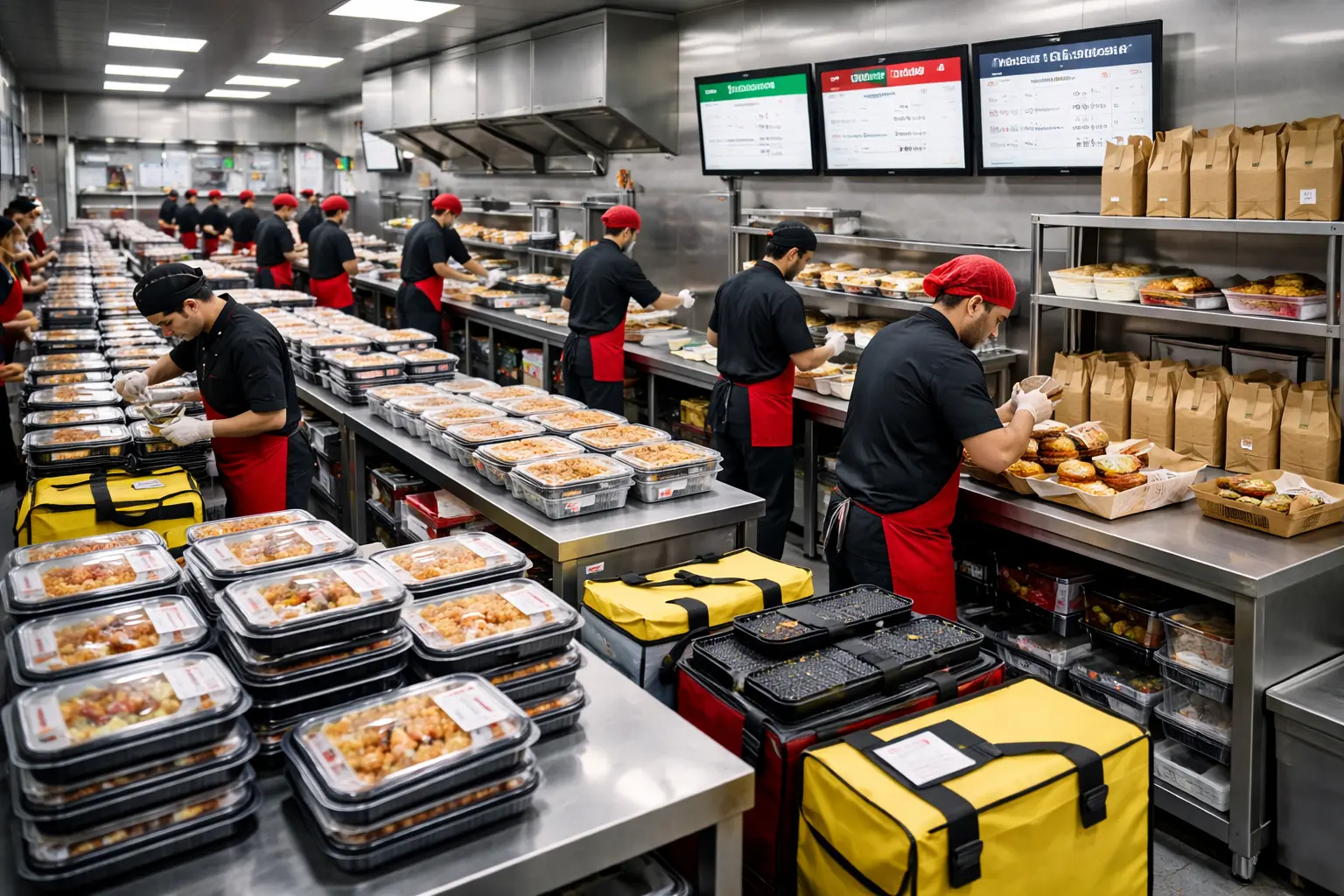
Festivals, promotions, and weekends put enormous pressure on cloud kitchen operations. Without strong SOPs, kitchens struggle with delays, errors, and quality lapses during peak demand.
A food brand with strong SOPs prepares for such scenarios in advance. Production planning, staffing models, inventory buffers, and dispatch workflows are all designed to handle volume spikes. As a result, the brand performs consistently even when demand multiplies.
This reliability during high-pressure moments strengthens brand credibility and partner confidence.
Modern cloud kitchens integrate SOPs with technology platforms that manage orders, inventory, kitchen workflows, and performance analytics. This integration ensures that SOPs are not static documents but living systems that evolve with the business.
For a food brand with strong SOPs, technology enables real-time monitoring, rapid feedback loops, and continuous improvement. It also allows centralized control while enabling decentralized execution across multiple locations.
In the long run, the true value of a food brand is not just its menu or marketing—it is its ability to deliver consistently at scale. Investors, partners, and aggregators all recognize that system-driven brands are more resilient, profitable, and expandable.
A food brand with strong SOPs is better positioned to enter new markets, launch new categories, and withstand operational shocks. Its growth is sustainable because it is built on structure rather than improvisation.
As the cloud kitchen industry continues to evolve, competition will intensify. Brands that rely solely on creativity or short-term tactics will struggle to survive. Those that invest in strong operational foundations will emerge as leaders.
SOPs are no longer back-end processes hidden from view. They are the silent drivers of customer satisfaction, partner success, and brand longevity.
Every successful cloud kitchen shares one common trait: it operates as a system, not an experiment. Behind every consistent meal, every five-star review, and every successful expansion lies a set of well-defined, well-executed SOPs.
Choosing to build or partner with a food brand with strong SOPs is not just an operational decision—it is a strategic one. It determines whether a cloud kitchen remains a small operation or evolves into a scalable, trusted, and profitable brand.
In the future of food delivery, the winners will not be those who move the fastest, but those who execute the best. And execution, at scale, begins with strong SOPs.