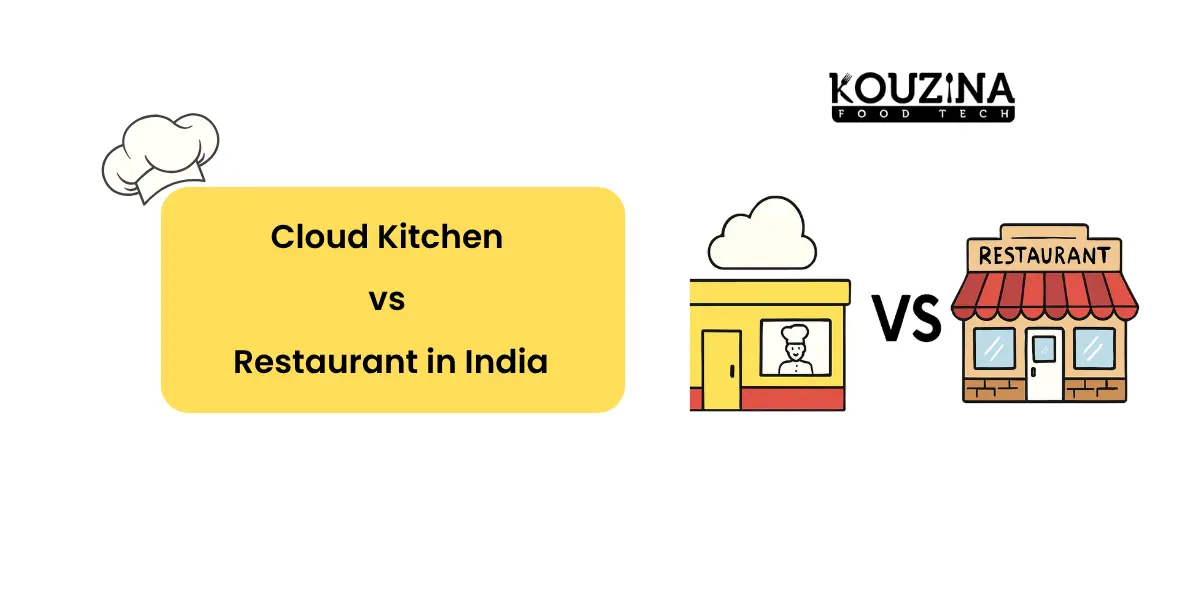
India’s food industry has undergone a massive transformation over the last decade. Traditional restaurants are no longer the only way to serve customers. Instead, cloud kitchens, also known as ghost kitchens or virtual kitchens, are rapidly becoming the preferred business model for food entrepreneurs.
This transformation is largely powered by online food delivery platforms like Swiggy and Zomato, which have changed how customers discover and order food. Today, thousands of entrepreneurs are building successful businesses by becoming Swiggy Zomato Cloud Kitchen Partners.
Companies like Kouzina Food Tech are playing a crucial role in this growth by enabling entrepreneurs to launch cloud kitchens quickly and efficiently.
In this guide, we’ll explore how cloud kitchens are expanding across India, how the Swiggy Zomato partner ecosystem works, and why brands like Kouzina are helping shape the future of food delivery.
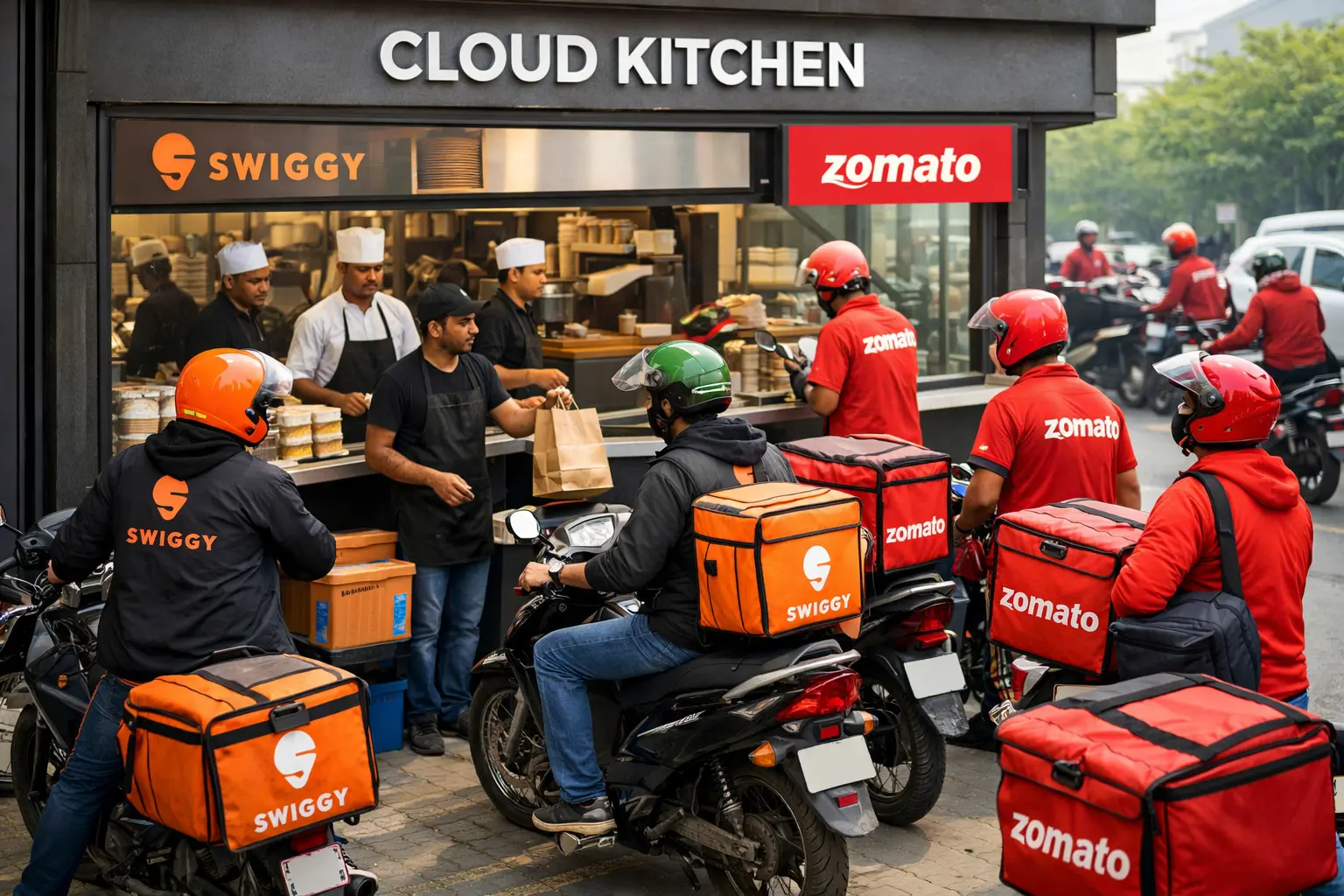
The cloud kitchen industry in India has grown at an incredible pace. Several factors have contributed to this growth:
Food delivery apps have made it easier than ever for customers to order meals from their smartphones. Platforms like Swiggy and Zomato connect restaurants with millions of hungry customers every day.
Because of these platforms, food businesses no longer need expensive dine-in spaces to reach customers.
Modern consumers prefer:
Cloud kitchens are perfectly designed to meet these needs.
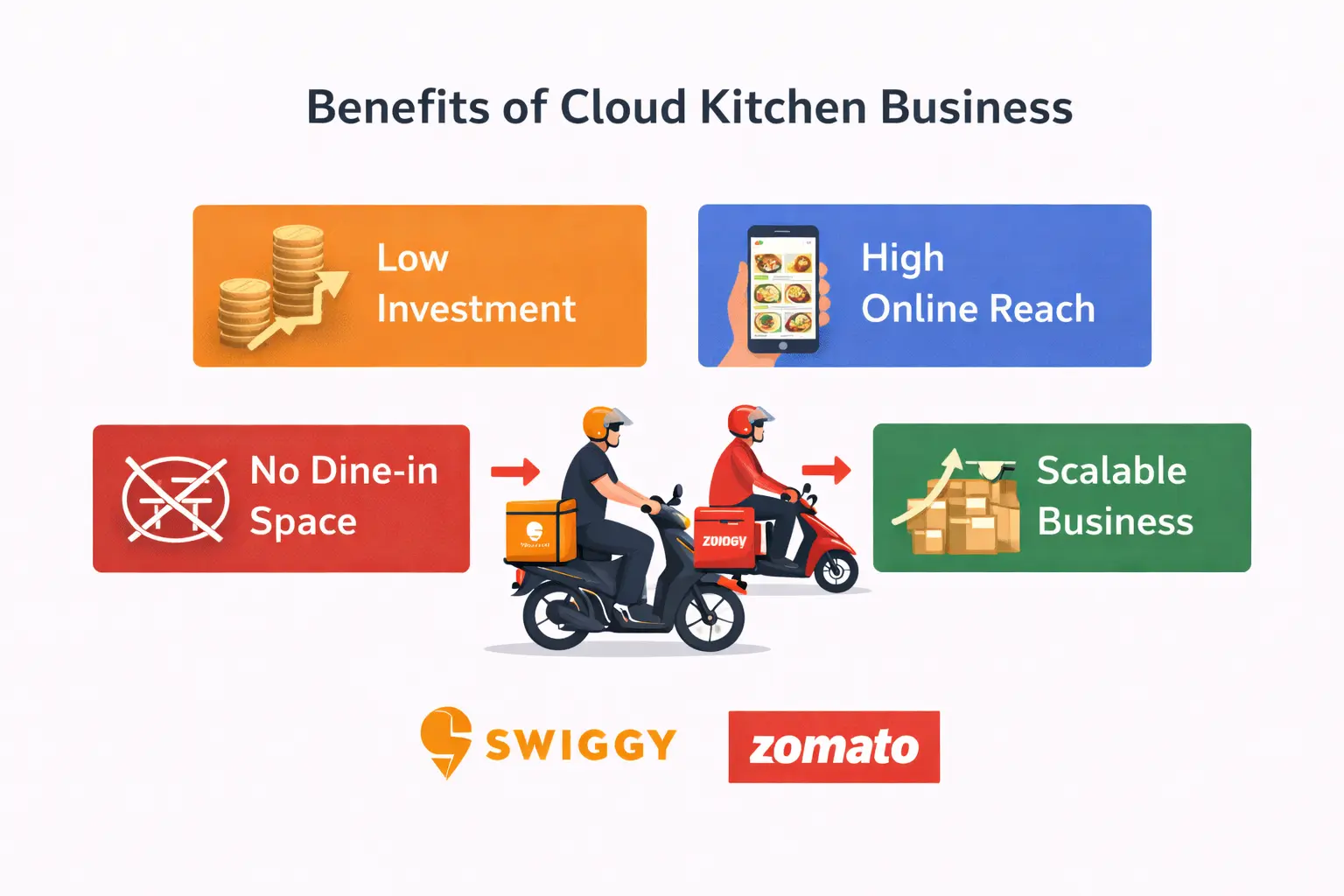
Starting a traditional restaurant in India can cost anywhere between ₹20 lakh and ₹1 crore. However, a cloud kitchen can start with significantly lower investment, making it attractive for entrepreneurs.
A Swiggy Zomato Cloud Kitchen Partner is a food business that operates a kitchen specifically designed to fulfill online orders through delivery platforms.
Instead of serving dine-in customers, these kitchens focus entirely on:
When you partner with Swiggy or Zomato, your kitchen becomes visible to thousands of potential customers in your delivery radius.
This model allows entrepreneurs to scale faster without investing heavily in real estate or dining infrastructure.
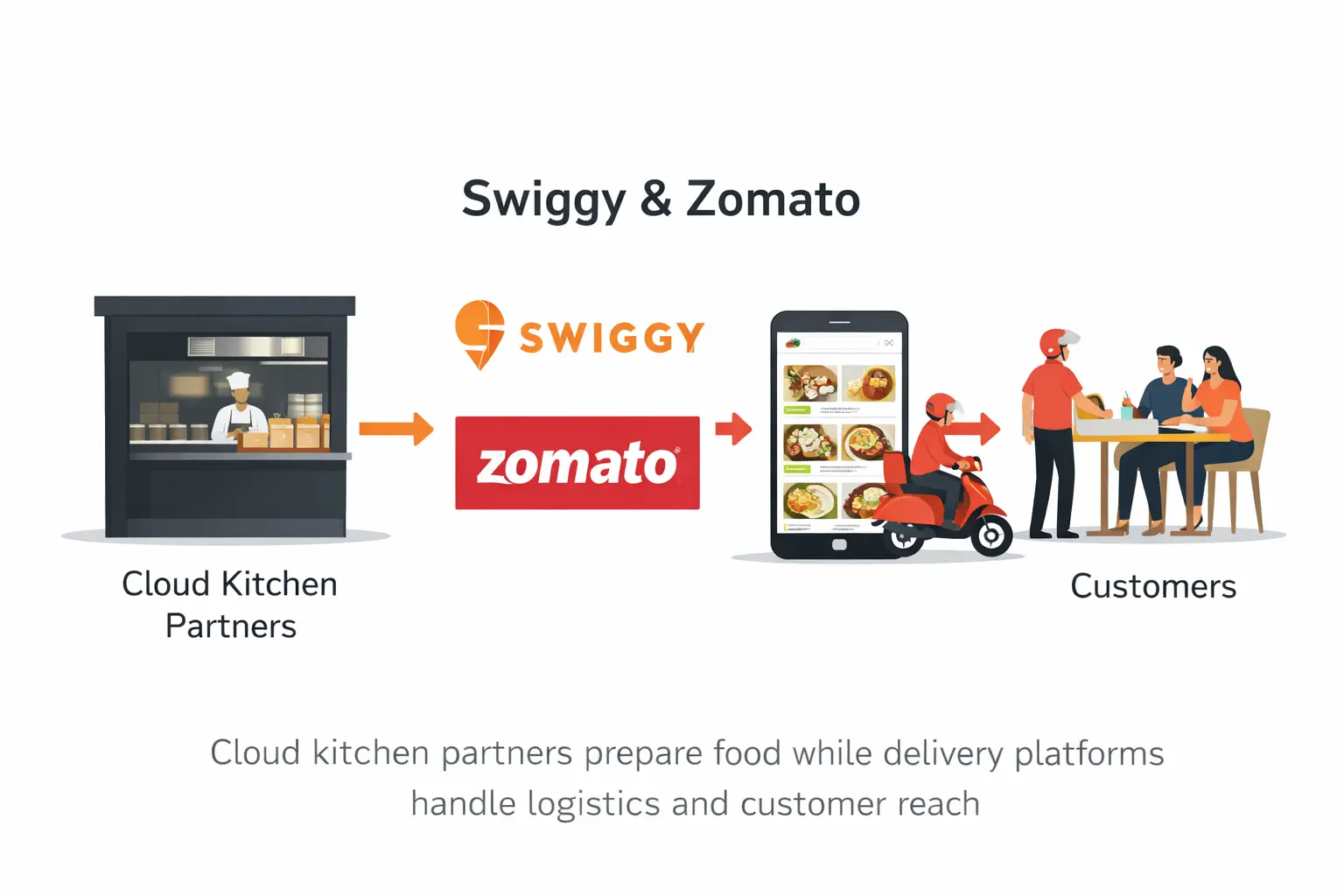
India’s online food delivery market has grown dramatically in the last decade. Millions of people now order food through apps every day.
This has created huge opportunities for cloud kitchen businesses.
With the help of platforms like Swiggy and Zomato, small kitchens can compete with large restaurant chains.
Cloud kitchens rely heavily on technology for:
Platforms provide real-time data that helps businesses improve performance and profitability.
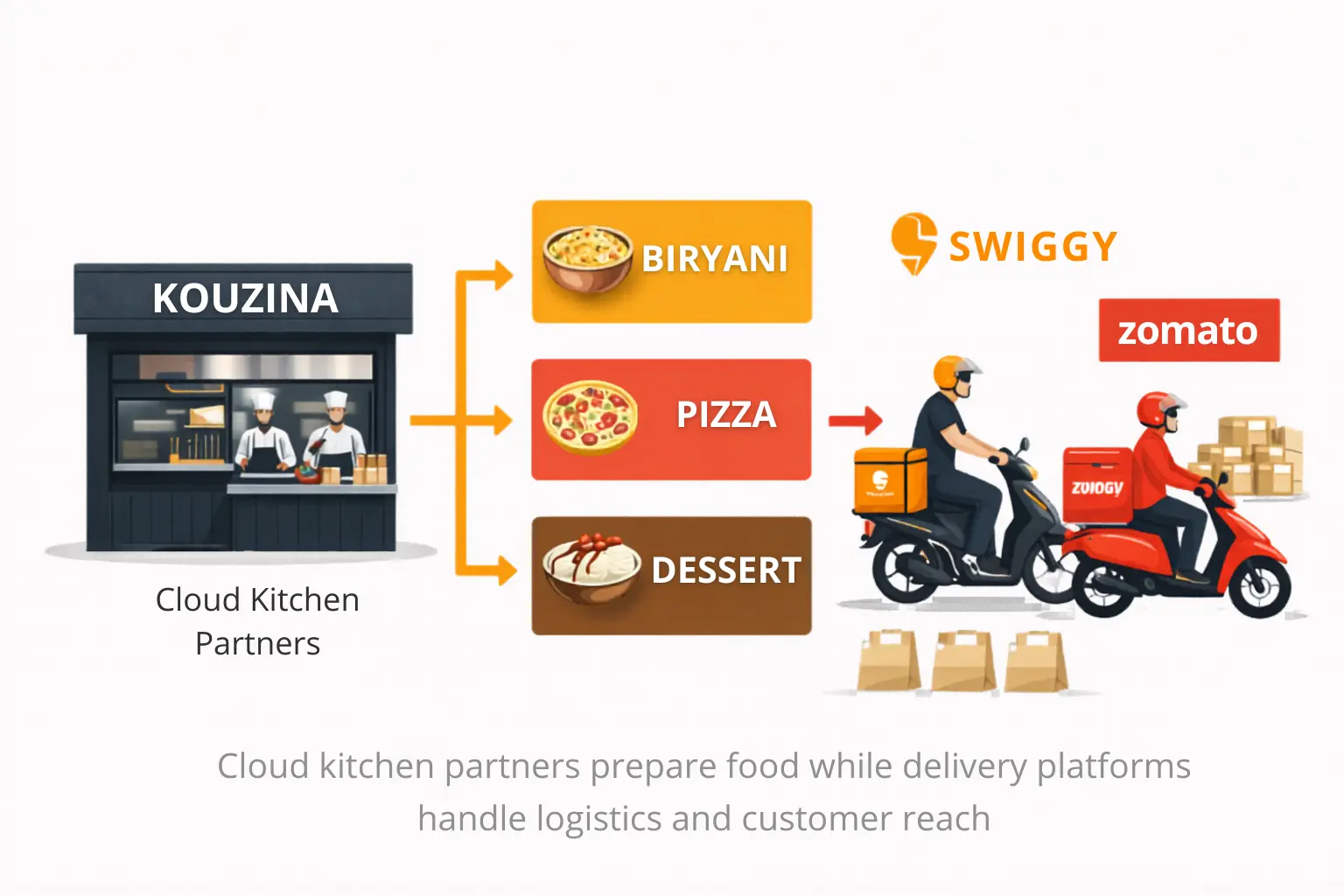
Many cloud kitchens operate multiple brands from a single kitchen.
For example, one kitchen may run:
This approach increases revenue without increasing infrastructure costs.
Companies like Kouzina Food Tech specialize in this multi-brand cloud kitchen model, helping partners maximize kitchen utilization and profits.
Starting a cloud kitchen independently can be challenging. Entrepreneurs must handle:
This is where Kouzina Food Tech makes a big difference.
Kouzina enables entrepreneurs to launch delivery-first food brands quickly and efficiently.
Instead of building a brand from scratch, partners get access to tested and popular brands that already perform well on delivery platforms.
This dramatically reduces risk.
One of Kouzina’s biggest strengths is its multi-brand kitchen strategy.
Partners can run multiple food brands from the same kitchen, which increases order volume and profitability.
Running a cloud kitchen requires efficient operations.
Kouzina supports partners with:
This support helps partners run kitchens smoothly while focusing on growth.
Delivery platforms like Swiggy and Zomato already have millions of active users.
By joining these platforms, your cloud kitchen instantly gains access to a large customer base.
Cloud kitchens require:
This significantly reduces startup and operational costs.
With the right partners and setup, a cloud kitchen can be launched within weeks instead of months.
Companies like Kouzina Food Tech streamline the setup process for new partners.
Delivery platforms provide valuable data such as:
This data helps cloud kitchens improve menus and maximize profits.
Location is important for delivery efficiency. Cloud kitchens should be placed in areas with high demand and good delivery coverage.
You’ll need:
You can learn more about food licensing requirements on the Food Safety and Standards Authority of India website.
Register your kitchen with Swiggy and Zomato to start receiving online orders.
Your menu should focus on:
Efficient operations ensure:
Working with experienced companies like Kouzina Food Tech can simplify this process.
Although the cloud kitchen model is growing rapidly, there are some challenges:
Thousands of brands compete on delivery platforms, making differentiation important.
Delivery apps charge commissions, which must be factored into pricing strategies.
Ensuring consistent food quality during delivery is crucial for customer satisfaction.
Despite these challenges, the cloud kitchen model remains one of the fastest-growing segments in the food industry.
Industry experts predict massive growth in the cloud kitchen segment over the next decade.
Key trends include:
Companies like Kouzina Food Tech are expected to play a major role in building scalable food brands and helping entrepreneurs succeed in this evolving ecosystem.
Entrepreneurs today are looking for low-risk, scalable food businesses.
By partnering with Kouzina Food Tech, they gain:
This makes it easier for new business owners to become successful Swiggy Zomato Cloud Kitchen Partners.
The food industry is evolving rapidly, and cloud kitchens are leading this transformation.
With the support of platforms like Swiggy and Zomato, entrepreneurs can now launch food businesses with lower investment and faster scalability.
Companies like Kouzina Food Tech are making this process even easier by providing the infrastructure, brands, and operational support needed to succeed.
For anyone looking to enter the food industry today, becoming a Swiggy Zomato Cloud Kitchen Partner could be one of the most promising opportunities in India’s rapidly growing food delivery market.