The Indian food industry is undergoing a massive transformation. Changing consumer habits, the rapid rise of food delivery platforms, and the growing demand for trusted brands have reshaped how food businesses are built and scaled. In this evolving landscape, the franchisee model has emerged as one of the most reliable and profitable ways to enter the food business.
For aspiring entrepreneurs, first-time investors, and even experienced restaurateurs, becoming a franchisee offers a structured path to ownership—without the uncertainty that comes with starting from scratch. But what does it really mean to be a franchisee? How does it work in the food industry? And what should you evaluate before investing in a food brand?
This guide explains everything you need to know about being a franchisee, with a clear focus on the Indian food ecosystem and modern, tech-enabled models like cloud kitchens.
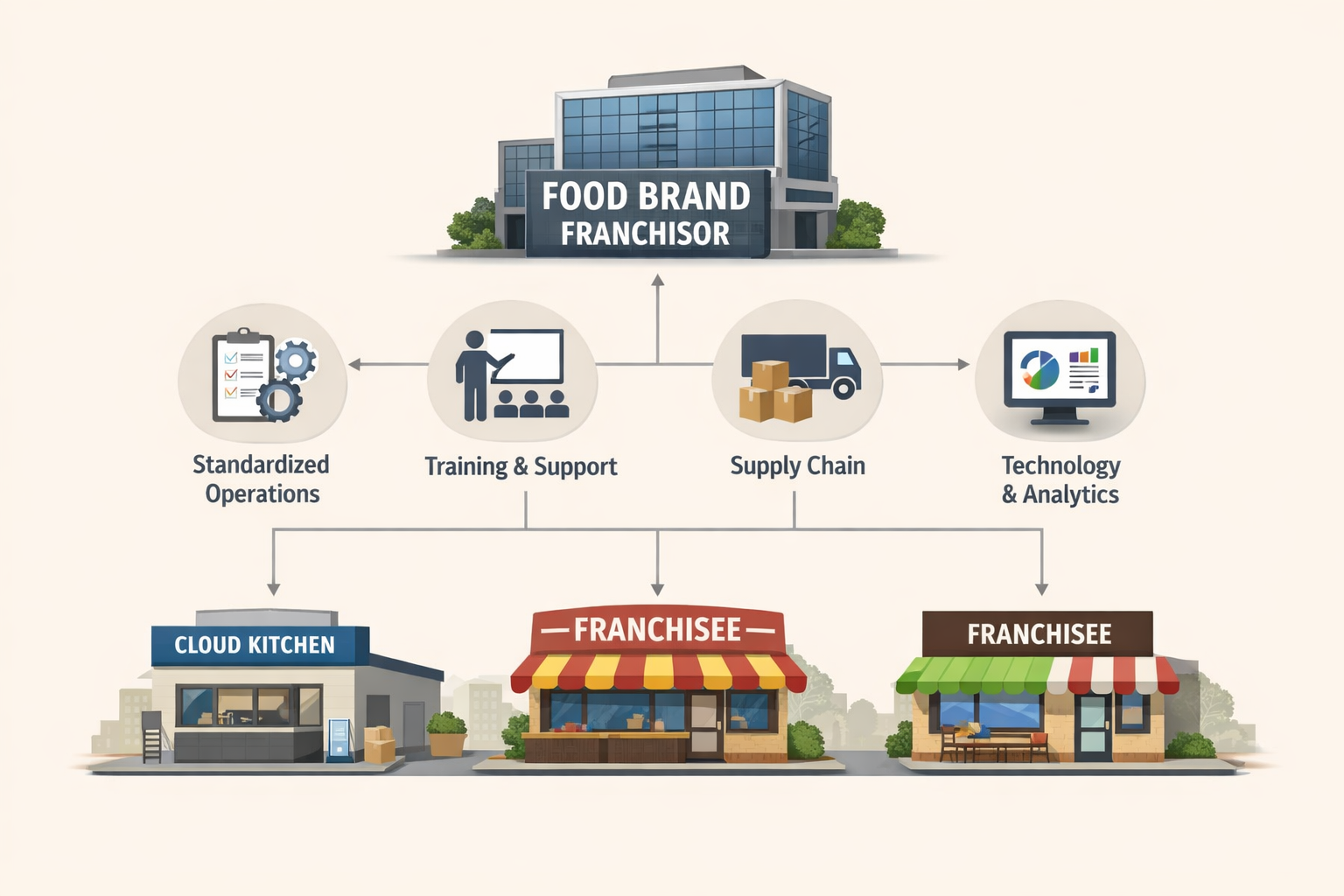
A franchisee is an individual or business entity that purchases the rights to operate a food brand under an established franchisor’s name, systems, and processes. Instead of building a restaurant or food brand independently, the franchisee runs the business using a proven blueprint provided by the brand owner.
In the food industry, this typically includes:
In return, the franchisee usually pays:
This arrangement creates a win–win model: brands scale faster, while franchisees reduce business risk.
India’s food services market is one of the fastest-growing in the world. According to industry reports by FSSAI and industry analysts, organized food services and delivery-first brands are gaining market share year after year.
Here’s why the franchisee model fits perfectly into this growth story:
External industry insights from platforms like the National Restaurant Association of India (NRAI) consistently highlight franchising as a key driver of organized food growth in India.
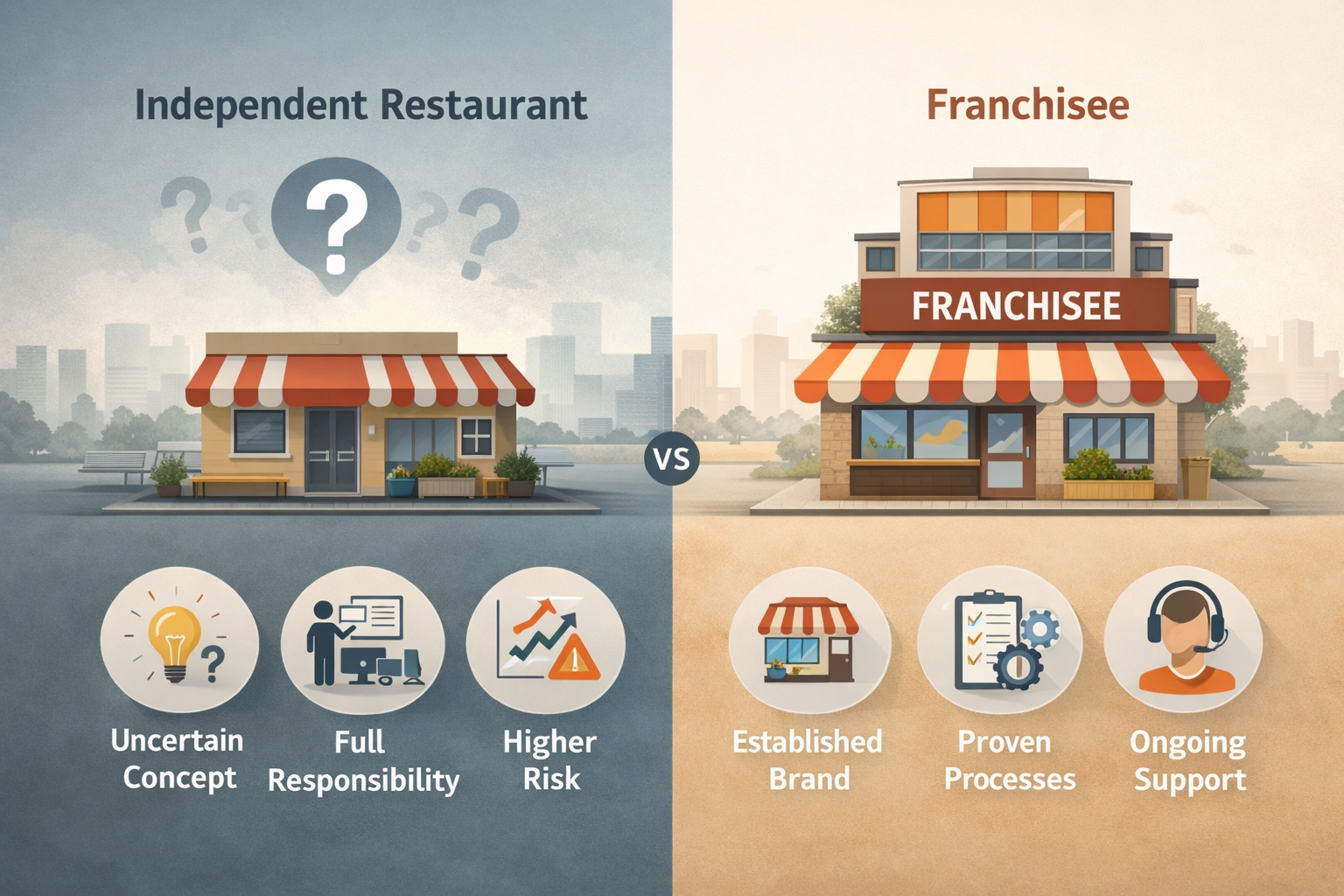
One of the biggest questions investors ask is whether to open an independent restaurant or become a franchisee.
For most first-time food entrepreneurs, the franchisee route offers stability and predictability, especially in competitive urban markets.
The biggest advantage of being a franchisee is reduced uncertainty. You’re investing in a brand that already understands customer preferences, pricing, and demand patterns.
Most food franchisee models allow you to go live within weeks instead of months. Location setup, menu finalization, and onboarding are streamlined.
Customers are more likely to order from a known brand than an unfamiliar outlet. This gives franchisees a strong head start from day one.
From kitchen layout to staff training, franchisees benefit from established systems. This is especially valuable for those without prior food industry experience.
Modern food brands provide franchisees with dashboards for order tracking, inventory management, and performance insights—something independent restaurants often lack.
Before investing, it’s important to understand the financial structure of a franchisee model.
In modern formats like the cloud kitchen model, these costs are much lower than traditional dine-in restaurants due to reduced real estate and staffing requirements.
While returns vary based on location and execution, most food franchisee models aim for:
Brands like Kouzina focus heavily on unit economics transparency, helping franchisees understand cost-to-profit ratios upfront.
Technology has become the backbone of modern food franchising. For a franchisee, tech-enabled operations directly impact profitability and efficiency.
Key technology advantages include:
Cloud kitchen brands, in particular, rely on tech to ensure consistency across hundreds of franchisee-operated kitchens. This eliminates guesswork and enables smarter decision-making at the unit level.
You can explore how technology-driven kitchens work in detail through Kouzina’s insights on modern food operations (internal Kouzina blog link suggestion).
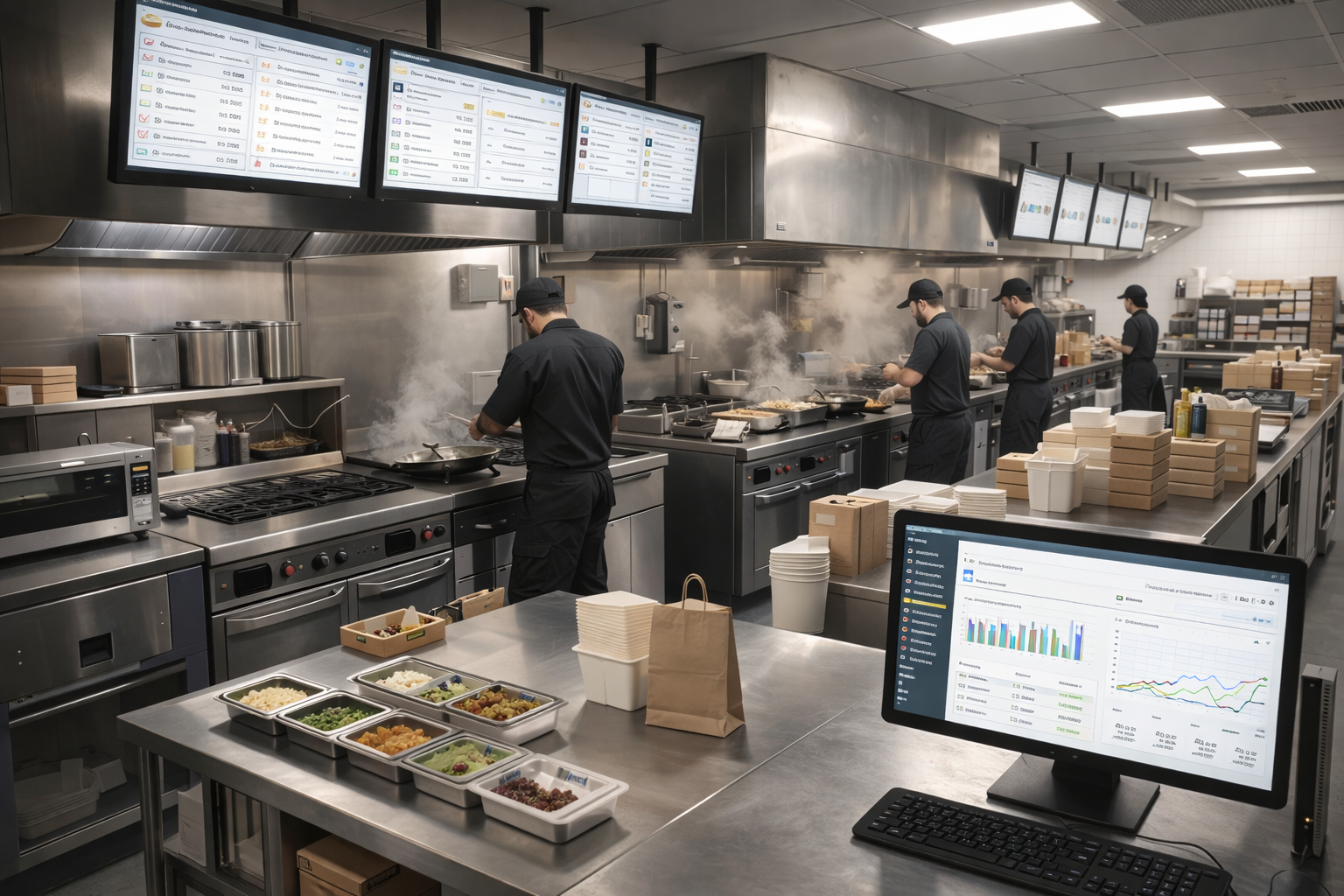
One of the most popular franchisee formats today is the cloud kitchen franchise.
For franchisees, cloud kitchens offer:
This model aligns perfectly with India’s growing food delivery ecosystem, supported by platforms like Swiggy and Zomato.
Even with a strong brand, franchisees can make mistakes that impact profitability.
Always understand margins, commissions, and operating costs before signing up.
Food businesses require discipline. SOPs, hygiene, and consistency are non-negotiable.
Not all franchises are built for long-term sustainability. Evaluate the brand’s growth strategy and franchisee support systems.
While the brand provides the blueprint, local execution still matters—staff quality, adherence to processes, and daily oversight make a difference.
Before becoming a franchisee, assess the brand on these parameters:
For entrepreneurs exploring food franchise opportunities in India, brands with a tech-driven, asset-light approach offer better long-term sustainability.
Kouzina Foodtech has built its ecosystem keeping franchisees at the center. Unlike traditional restaurant franchising, Kouzina operates on a digital-first, asset-light approach.
Kouzina’s model enables franchisees to operate efficiently while benefiting from national-scale brand power. This approach significantly reduces operational risk and improves long-term returns.
You can also explore related insights on food business scalability and cloud kitchens through other Kouzina blog resources.
If you’re considering becoming a franchisee, here’s a simplified roadmap:
Taking a structured approach helps avoid surprises and sets clear expectations from the start.
Becoming a franchisee is not just about owning a food outlet—it’s about partnering with a system designed for growth. In a competitive and fast-changing food market, franchisee-led models provide a balance of independence and support.
For entrepreneurs looking to enter the food business with lower risk, faster scalability, and professional backing, the franchisee route stands out as a practical and future-ready choice.
With the rise of cloud kitchens, technology-driven operations, and brand-led demand, now is an ideal time to explore franchisee opportunities in India’s food industry.