India’s relationship with chai runs far deeper than a daily habit. From roadside tapris to premium cafés, tea has evolved into a full-fledged food and beverage category with structured brands, standardized menus, and scalable business models. Over the last decade, chai cafés have emerged as a strong sub-segment within India’s QSR and café ecosystem.
Among these brands, Chaayos stands out as one of the earliest and most recognisable names. However, it now operates in a competitive landscape that includes organised chai café chains, regional players, and multi-brand food operators offering tea as part of a wider menu.
This blog takes a business-first look at Chaayos and compares it with other chai café brands in India — focusing on cost structures, menu strategy, and operating models. It also explores how multi-brand platforms like KouzinaFoodTech offer an alternative approach by combining chai with a broader food portfolio.
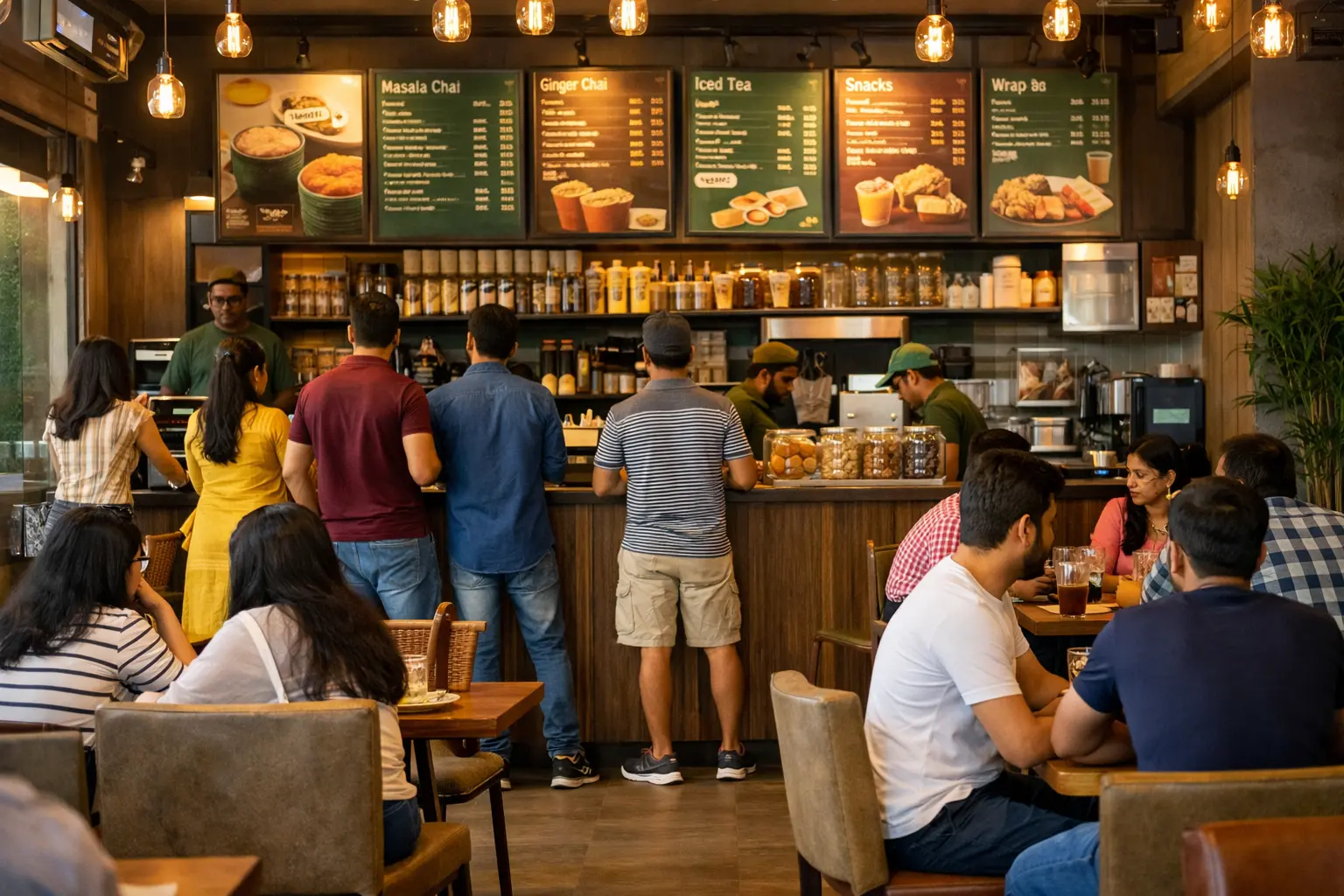
Traditionally, chai consumption in India was informal and unorganised. Local vendors dominated the market with minimal setup costs and no standardisation. However, changing consumer behaviour — especially in urban India — created space for organised chai brands.
Key drivers behind the rise of chai cafés include:
Chai cafés positioned themselves between roadside vendors and premium coffee chains, offering familiar flavours in a modern setting.
Chaayos entered the Indian market with a simple but differentiated proposition — customisable chai. Instead of offering a fixed menu, the brand allowed customers to personalise their tea based on ingredients, sweetness levels, milk types, and flavours.
Over time, Chaayos expanded its menu to include snacks, light meals, and seasonal offerings, but chai continues to remain at the core of the brand identity.
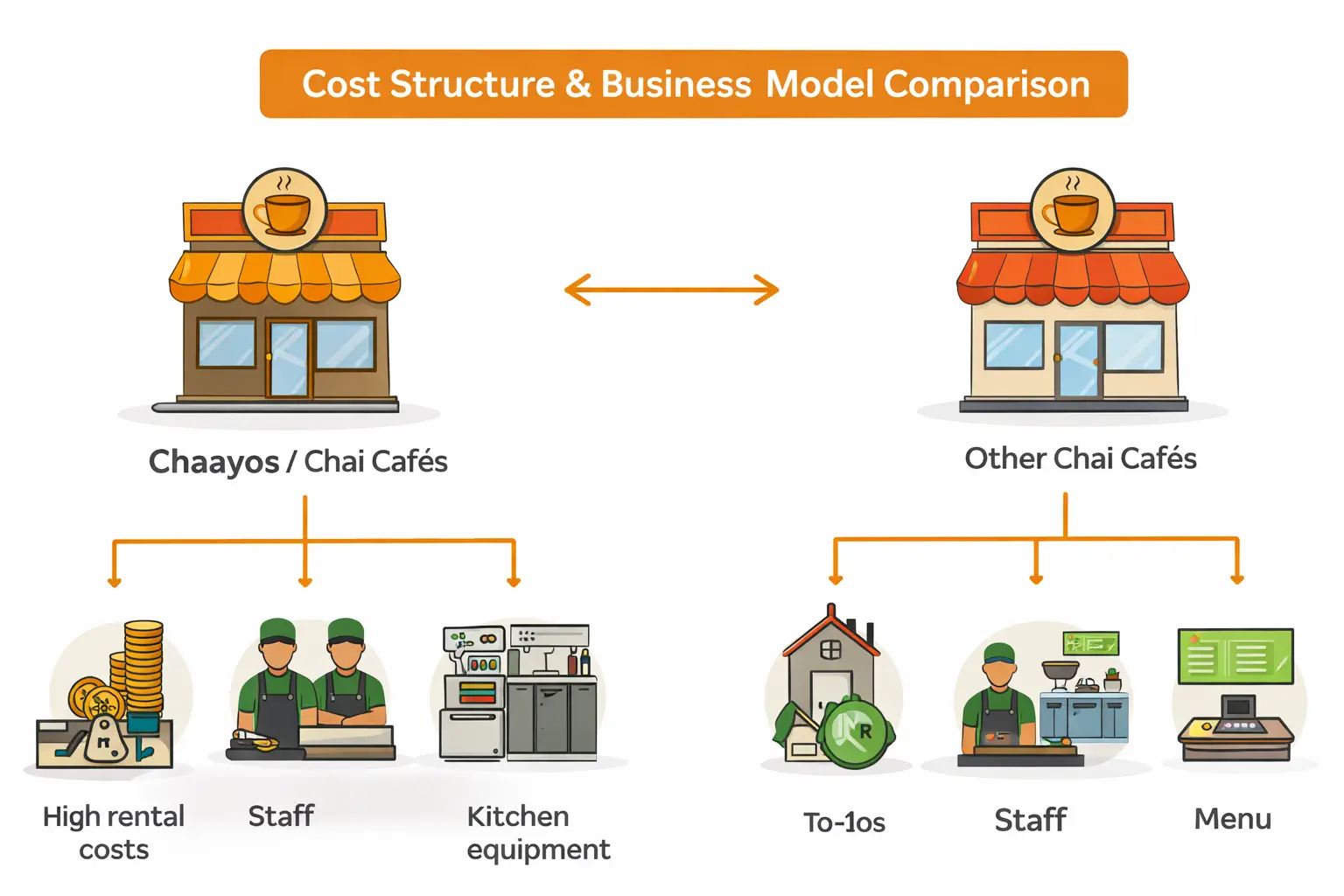
One of the most important factors for any food business is the cost of setup and ongoing operations. Chai cafés vary widely depending on location, format, and brand positioning.
Chaayos typically operates through company-owned outlets, especially in metro cities. The cost structure reflects its premium positioning.
Key cost components include:
This model works well in high-footfall locations but requires significant capital investment and longer breakeven periods.
Other chai café brands in India operate at varying price points and formats.
Common characteristics include:
These brands often focus on affordability and faster expansion but may compromise on experience depth or menu variety.
Regional chai brands and independent cafés operate with:
While margins can be attractive, scalability and consistency often remain challenges.
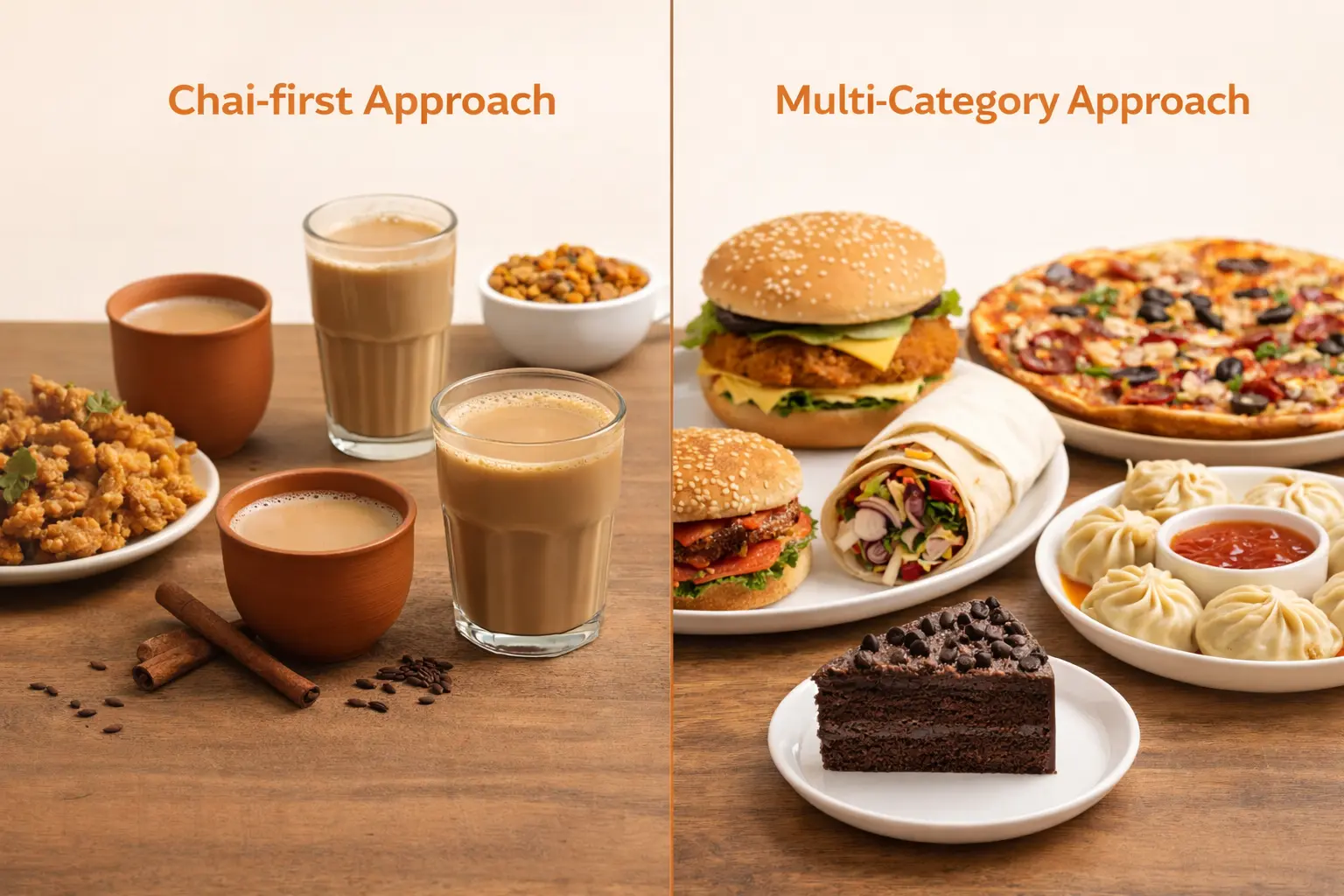
Menu design plays a critical role in revenue stability and customer retention.
Chaayos follows a chai-first approach, supported by a curated food menu.
Key menu elements include:
This focused strategy strengthens brand recall but also limits cross-category revenue opportunities.
Many competing chai cafés adopt:
This keeps operations lean but may reduce average order value.
Chaayos follows a vertically integrated café model:
This ensures consistency across outlets but comes with higher operating costs.
Other brands often operate on:
While this enables faster expansion, maintaining uniform quality across locations can be challenging.
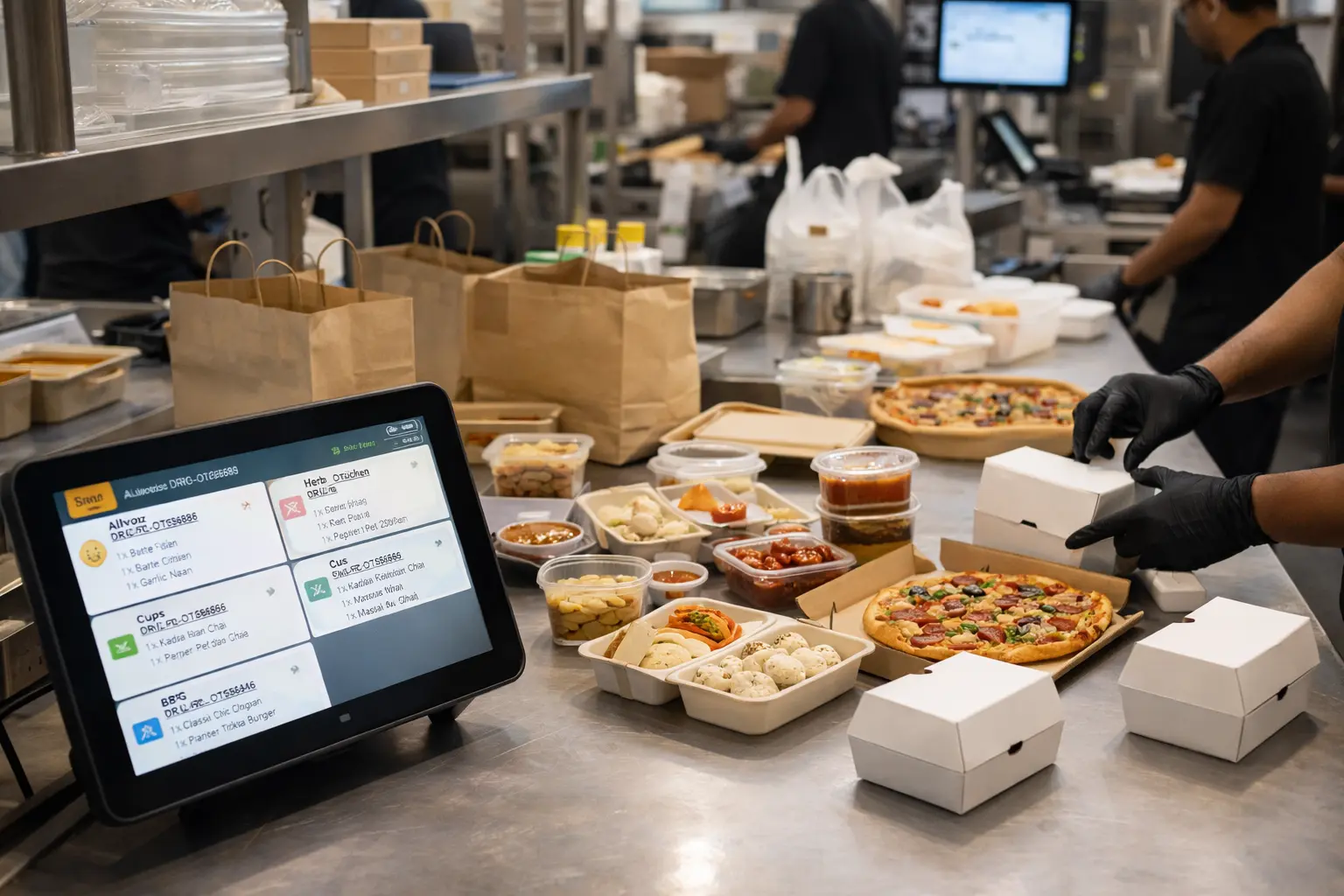
Unlike single-brand chai cafés, Kouzina Food Tech operates a multi-brand, multi-category model that caters to evolving consumer preferences and business realities.
Instead of building a café around only chai, Kouzina enables operators to run multiple food brands from a single kitchen infrastructure.
Boss Chai is Kouzina’s dedicated chai-focused brand, designed for:
It caters to customers looking for comfort beverages without the need for a dine-in café.
Multi-Category Offering Under Kouzina
One of Kouzina’s key differentiators is menu diversification. Operators are not limited to chai alone.
A single Kouzina kitchen can serve:
This allows businesses to tap into multiple consumption occasions — breakfast, evening snacks, late-night orders, and group meals.
Relying only on chai can create demand fluctuations based on:
A diversified menu reduces dependency on a single category and improves revenue predictability.
Compared to standalone chai cafés, a multi-brand model:
This approach aligns well with the evolving delivery-first food economy.
| Aspect | Chaayos / Chai Cafés | Kouzina Multi-Brand Model |
|---|---|---|
| Setup Cost | High (dine-in focused) | Lower (delivery-first) |
| Menu Flexibility | Limited | High |
| Revenue Streams | Beverage-led | Multi-category |
| Scalability | Location dependent | Asset-light |
| Risk Diversification | Low | High |
Chai cafés depend heavily on footfall and physical presence. In contrast, delivery-first kitchens can operate from non-prime locations while reaching a wider audience.
Kouzina’s model allows:
Today’s consumers do not just look for a place to drink chai. They look for:
This shift has opened opportunities beyond traditional café formats.
Chaayos has successfully built a strong brand by modernising chai consumption and creating a café experience around it. However, the model works best in high-density urban markets and requires significant investment.
Other chai café brands offer more affordable entry points but face challenges in scale and differentiation.
Multi-brand platforms like Kouzina present a different path — one that focuses on operational efficiency, menu diversity, and scalability, rather than single-category dependence.
The Indian chai market is no longer just about tea. It is about experience, access, and adaptability.
For entrepreneurs and food operators, the right model depends on capital availability, risk appetite, and long-term growth goals.