Burger King is one of the most recognized global fast-food brands, known for its flame-grilled burgers, aggressive pricing, and mass appeal. Since entering India, Burger King has expanded rapidly, attracting aspiring entrepreneurs and investors who want to be part of a proven international brand.
With India’s food service market projected to cross USD 100 billion in the coming years, brands like Burger King naturally become a focal point for franchise seekers. However, while the brand is popular, many investors fail to fully understand the actual investment cost, operational complexity, and profit margins involved in running a Burger King outlet in India.
In this blog, we break down:
Founded in 1954 in the United States, Burger King is the world’s second-largest hamburger chain. The brand operates in over 100 countries with thousands of outlets worldwide.
Burger King entered India in 2014 and operates through a master franchise model. In India, the brand is managed by Restaurant Brands Asia Ltd, which controls expansion, supply chain, pricing, and brand standards.
Unlike small or mid-sized franchises, Burger King India does not follow an individual franchise ownership model in most cases. This is a critical detail that many investors overlook.
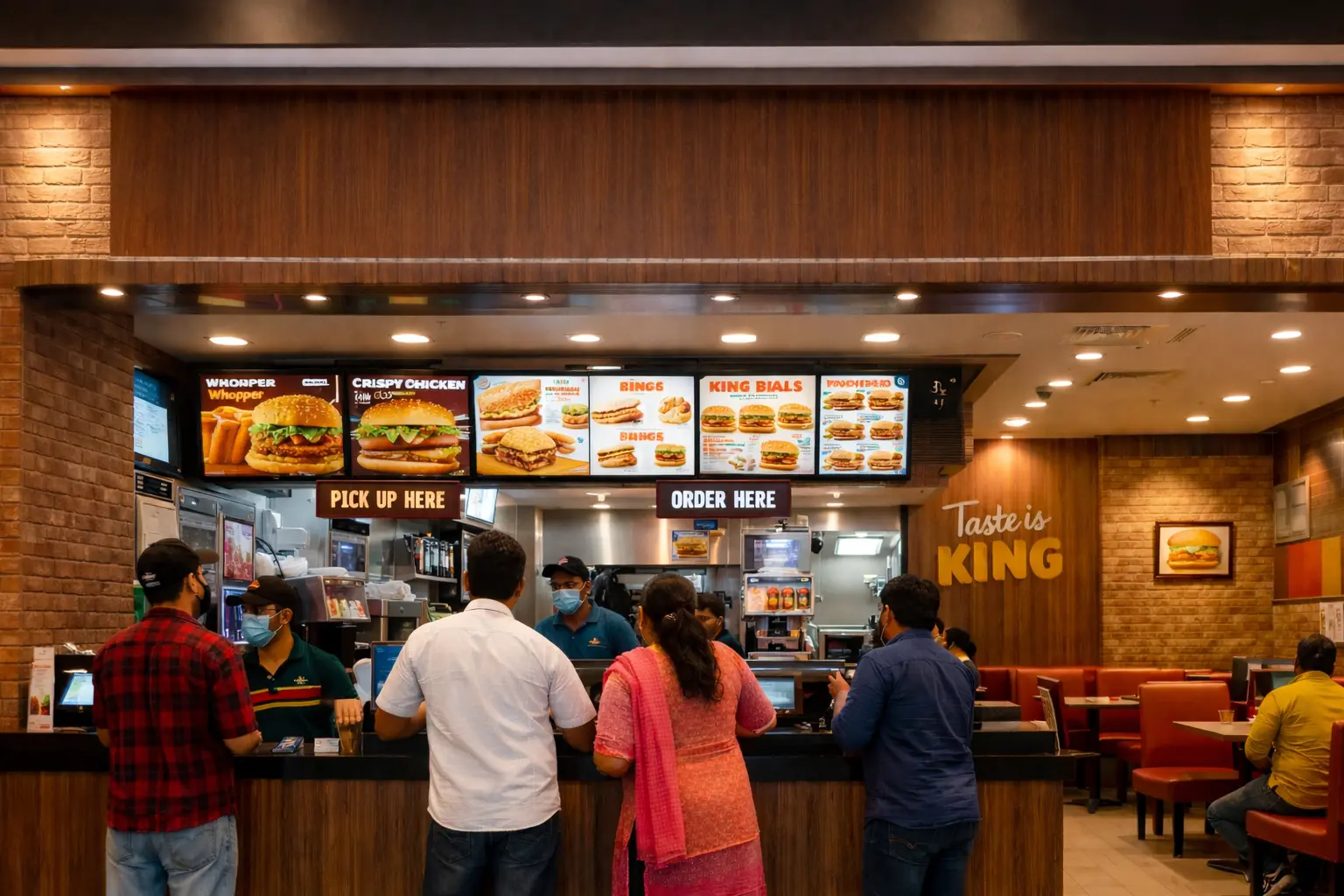
Burger King follows a centralized, brand-controlled QSR (Quick Service Restaurant) model, which includes:
This model works well for corporations with deep pockets—but it can be challenging for individual investors.
One of the most searched questions online is:
“How much does it cost to open a Burger King franchise in India?”
| Cost Component | Approximate Cost |
|---|---|
| Franchise Fee | ₹25–30 lakh |
| Store Setup & Interiors | ₹1.5–2.5 crore |
| Kitchen Equipment | ₹40–60 lakh |
| Real Estate & Security Deposit | ₹50 lakh–₹1 crore |
| Initial Inventory & Staff Training | ₹10–15 lakh |
| Total Investment | ₹3–5 crore |
Important Note:
Burger King India largely follows a company-owned outlet model, meaning direct franchise opportunities are extremely limited or unavailable for most individual investors.
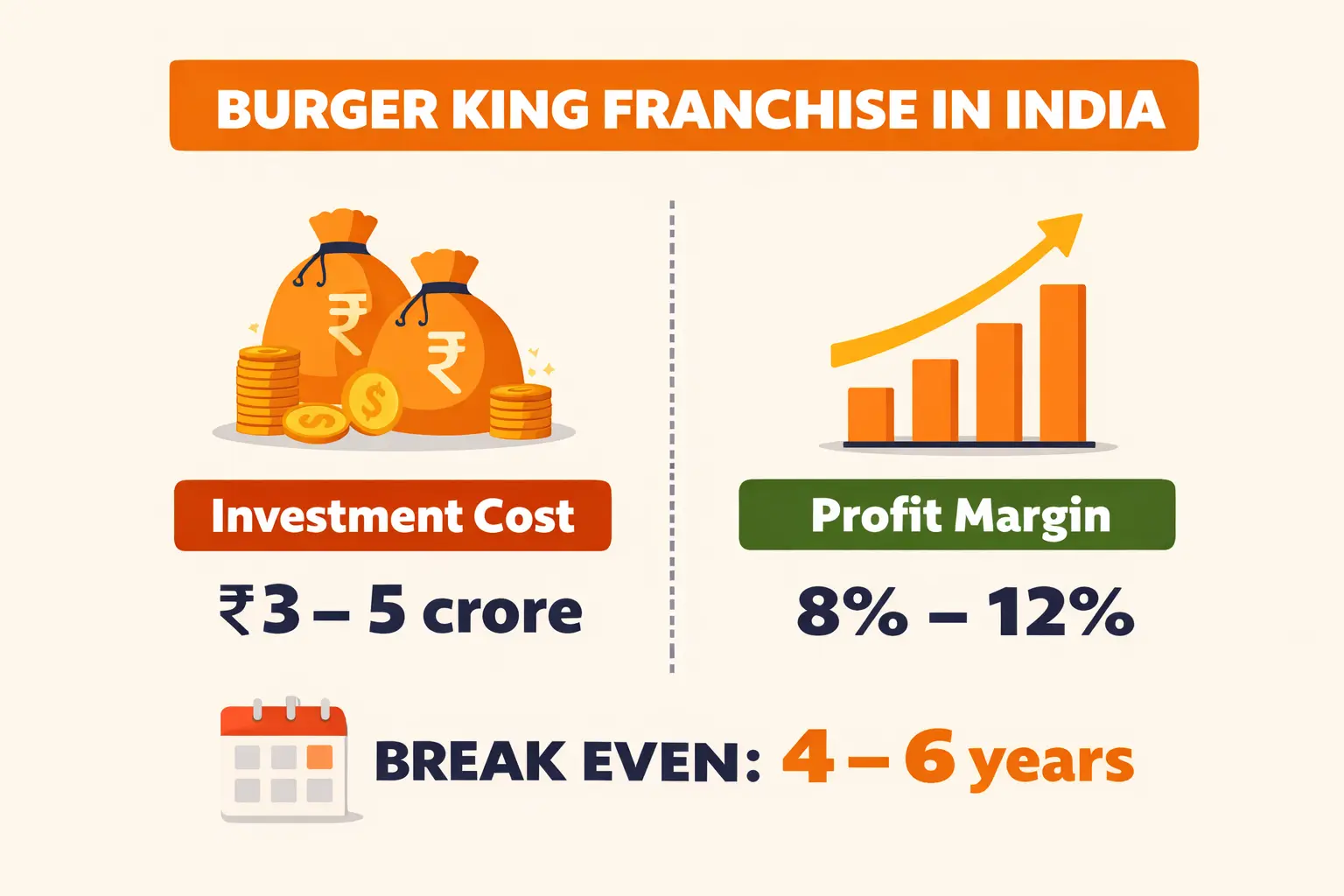
8%–12% (on average)
While Burger King is a powerful brand, it comes with significant challenges:
Investing ₹3–5 crore upfront puts immense pressure on cash flow and ROI.
Menu pricing, supplier selection, and promotions are centrally controlled.
Premium locations mean high rent, long lock-in periods, and limited flexibility.
Large teams, high attrition, compliance requirements, and daily operational stress.
Aggregator platforms can take 20–30% commission, directly impacting margins.
Burger King can be profitable only if:
For most first-time food entrepreneurs, this model is high-risk and capital-intensive.
India’s food industry is evolving rapidly. Entrepreneurs today are moving away from:
Instead, they are choosing asset-light, technology-driven, cloud kitchen-first models—and this is where Kouzina Food Tech stands out.
Kouzina Food Tech is redefining how food businesses scale in India by enabling entrepreneurs to run multiple powerful brands from a single kitchen—without the massive costs of global QSR franchises.
Learn more:
https://www.kouzinafoodtech.com/
Unlike Burger King’s single-brand dependency, Kouzina partners operate multiple food brands from one kitchen, reducing risk and increasing order volume.
Popular Kouzina brands include:
Kouzina focuses on delivery-optimized kitchens, eliminating:
Read more:
www.kouzinafoodtech.com/blog/rolling-plate-cloud-kitchen-franchise-india
Kouzina provides:
This allows partners to focus on execution, not experimentation.
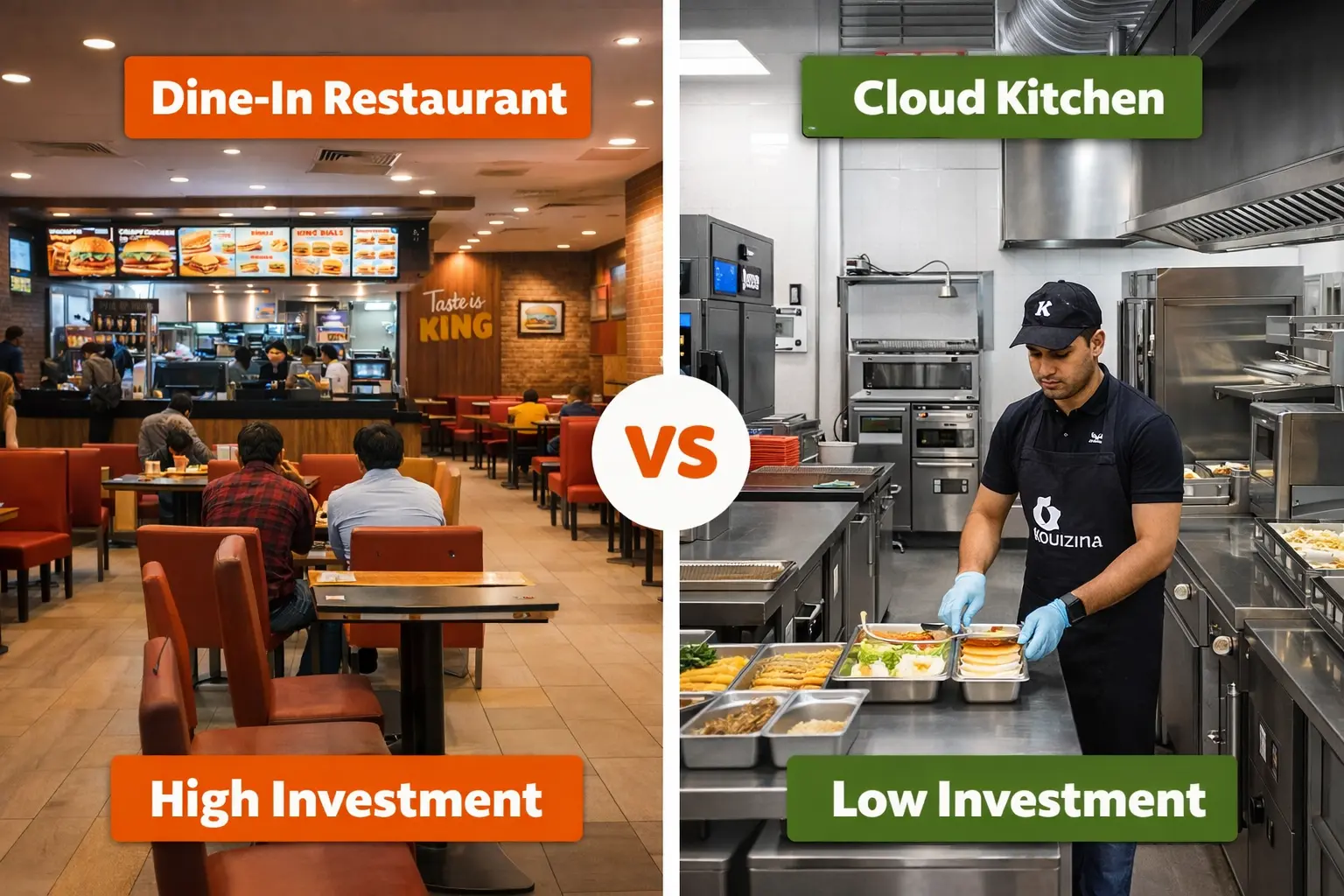
| Parameter | Burger King | Kouzina Food Tech |
|---|---|---|
| Investment | ₹3–5 crore | ₹12–15 lakh |
| Format | Large dine-in QSR | Cloud kitchen |
| Break-even | 4–6 years | 6–12 months |
| Brand Control | Centralized | Partner-friendly |
| Scalability | Capital-heavy | Asset-light |
| Ideal For | Corporates | First-time & growth-focused entrepreneurs |
According to industry reports:
While Burger King remains a globally admired brand, its high investment and limited franchise accessibility make it unsuitable for most aspiring food entrepreneurs in India.
On the other hand, Kouzina Food Tech offers:
For entrepreneurs looking to enter the food business without burning crores, Kouzina represents a future-ready alternative to traditional franchises like Burger King.