India’s food delivery market has undergone a massive transformation over the last decade. What once revolved around traditional dine-in restaurants has now evolved into a technology-driven ecosystem powered by cloud kitchens, online marketplaces, and data-led decision-making. At the center of this shift is a rapidly growing concept known as virtual restaurant brands.
Virtual restaurant brands are redefining how food businesses are created, scaled, and consumed. With lower investment requirements, faster go-to-market timelines, and the ability to operate multiple brands from a single kitchen, they have become a powerful growth engine for the Indian food and beverage (F&B) industry.
In this blog, we explore what virtual restaurant brands are, how they work, and why they are transforming India’s food delivery market, especially within the cloud kitchen ecosystem.
A virtual restaurant brand is a food brand that operates exclusively online without a physical dine-in outlet. These brands are available only through food delivery platforms such as Swiggy and Zomato and typically operate from cloud kitchens or shared kitchen infrastructure.
Unlike traditional restaurants, virtual brands:
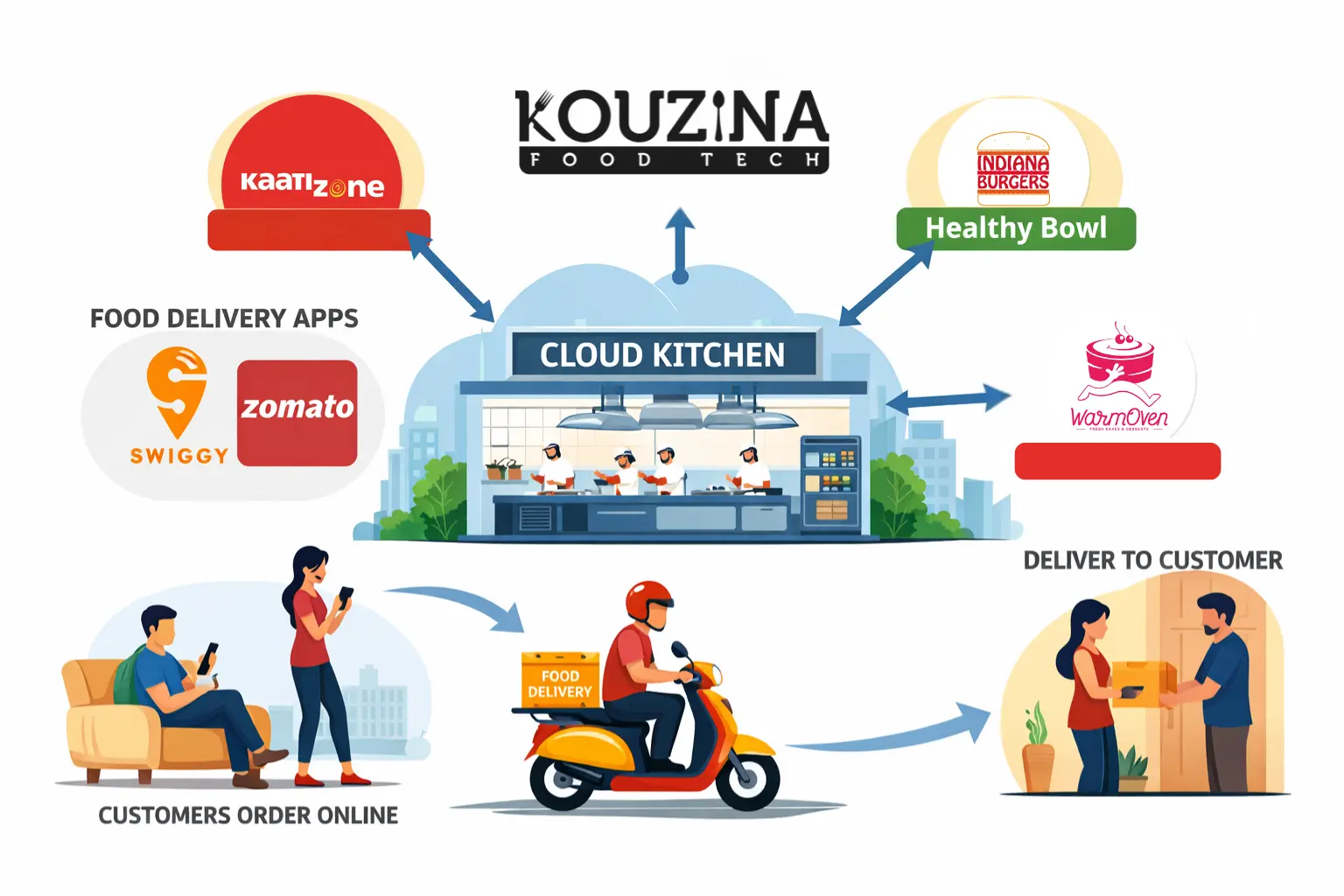
In many cases, a single kitchen can operate multiple virtual restaurant brands, each with a distinct cuisine, menu, and brand identity.
Virtual restaurant brands are built on a digital-first operating model. Here’s how the system works:
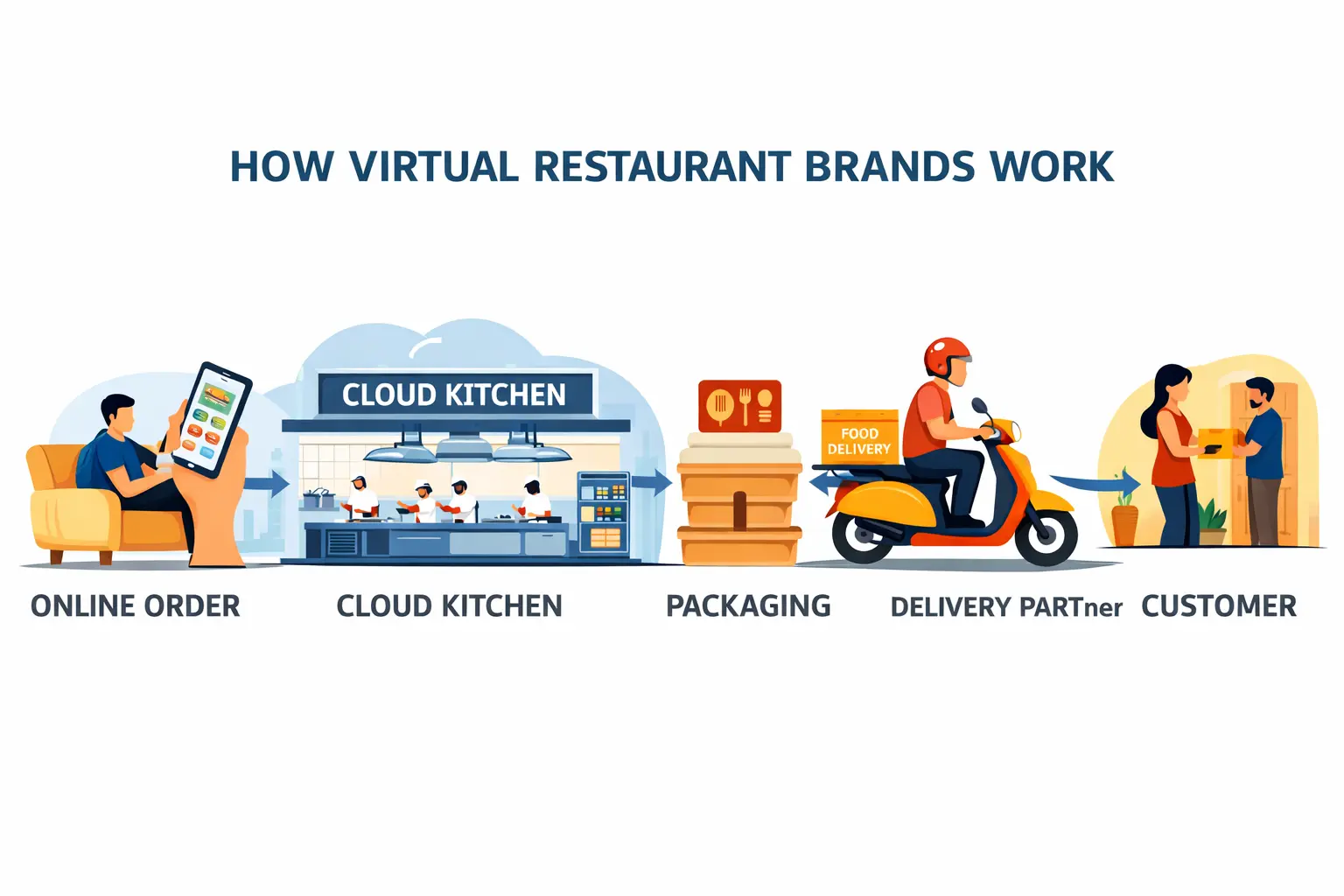
This asset-light model allows businesses to launch faster, expand across cities, and experiment with new cuisines without the risks of traditional restaurant formats.
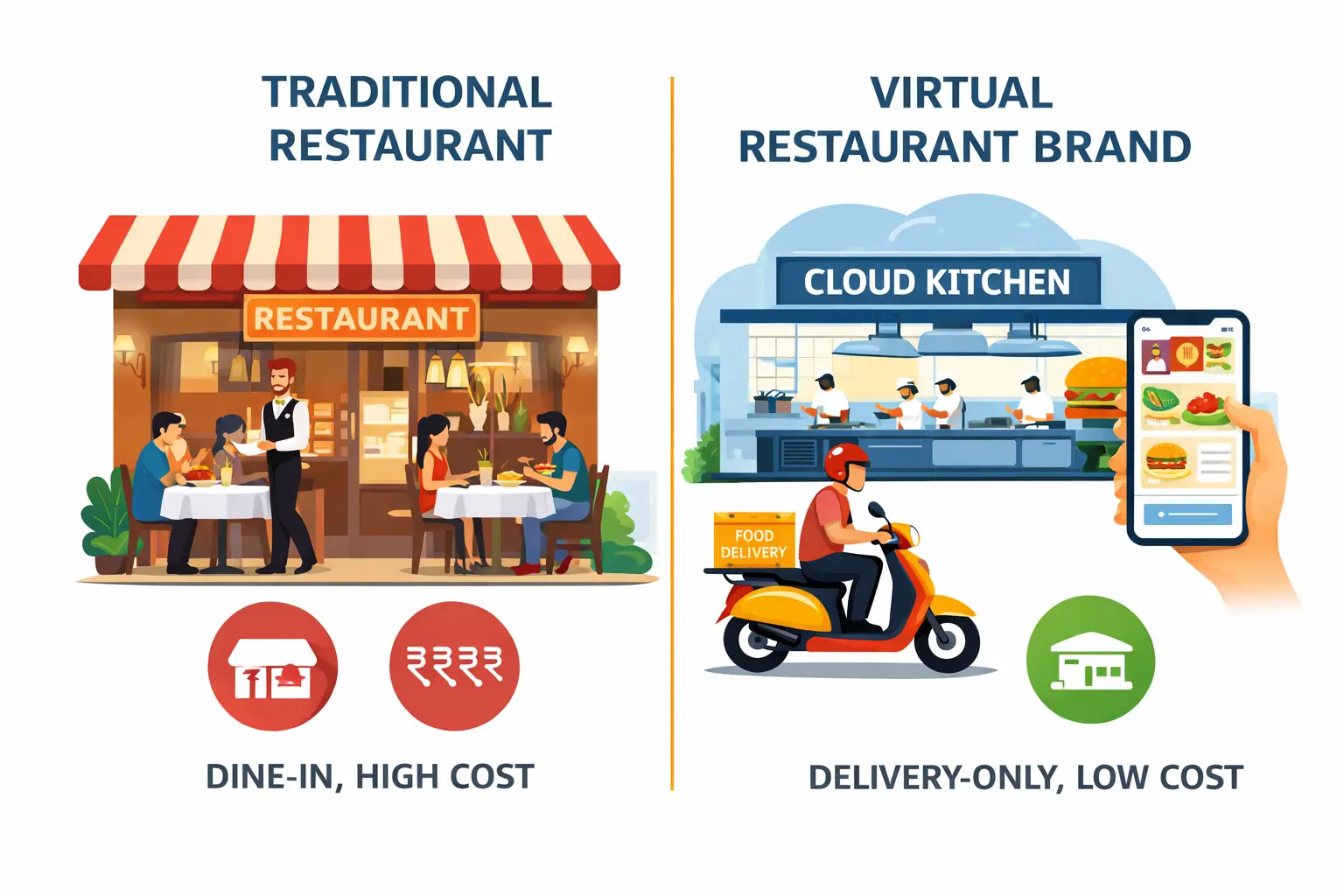
This fundamental difference is why virtual restaurant brands are gaining traction among entrepreneurs, established restaurant groups, and food tech companies.
India’s food delivery market has grown exponentially due to increased smartphone usage, digital payments, and changing consumer habits. Platforms like Swiggy and Zomato have created the perfect environment for delivery-only brands to thrive.
According to industry reports, India’s online food delivery market is expected to grow steadily over the next decade, making virtual restaurant brands a natural fit for this demand.
Launching a traditional restaurant in India requires:
Virtual restaurant brands eliminate most of these barriers, enabling:
This democratization of food entrepreneurship is a major reason behind their popularity.
A virtual restaurant brand can be launched in weeks instead of months. Menus can be tested digitally, feedback can be analyzed in real time, and underperforming concepts can be quickly refined or replaced.
This agility is nearly impossible in traditional restaurant formats.
Cloud kitchens form the backbone of virtual restaurant brands. They provide:
Companies like Kouzina Food Tech enable entrepreneurs and brands to operate multiple virtual restaurant brands efficiently by offering end-to-end cloud kitchen solutions.
Since there is no dine-in infrastructure, capital expenditure is significantly reduced. This leads to:
One of the biggest advantages is the ability to run multiple brands from a single kitchen. For example:
All can operate from the same space, maximizing kitchen utilization and profitability.
Virtual restaurant brands rely heavily on data such as:
This data helps brands optimize menus, pricing, and marketing strategies in real time.
Once a brand’s model is proven, it can be replicated across multiple locations with minimal friction. Standard operating procedures and centralized brand control make expansion efficient.
Indian consumers today prioritize:
Virtual restaurant brands cater perfectly to these needs by offering:
Additionally, regional and hyper-local cuisine brands are finding new life through virtual platforms, reaching audiences far beyond their local markets.
Some popular categories thriving as virtual restaurant brands include:
This flexibility allows brands to adapt to local tastes while maintaining standardized operations.
While the model offers many advantages, it also comes with challenges:
This is where structured cloud kitchen partners and food tech platforms play a crucial role in enabling sustainable growth.
Food tech platforms provide:
Kouzina Food Tech, for example, works closely with brand partners to build, scale, and manage virtual restaurant brands across India.
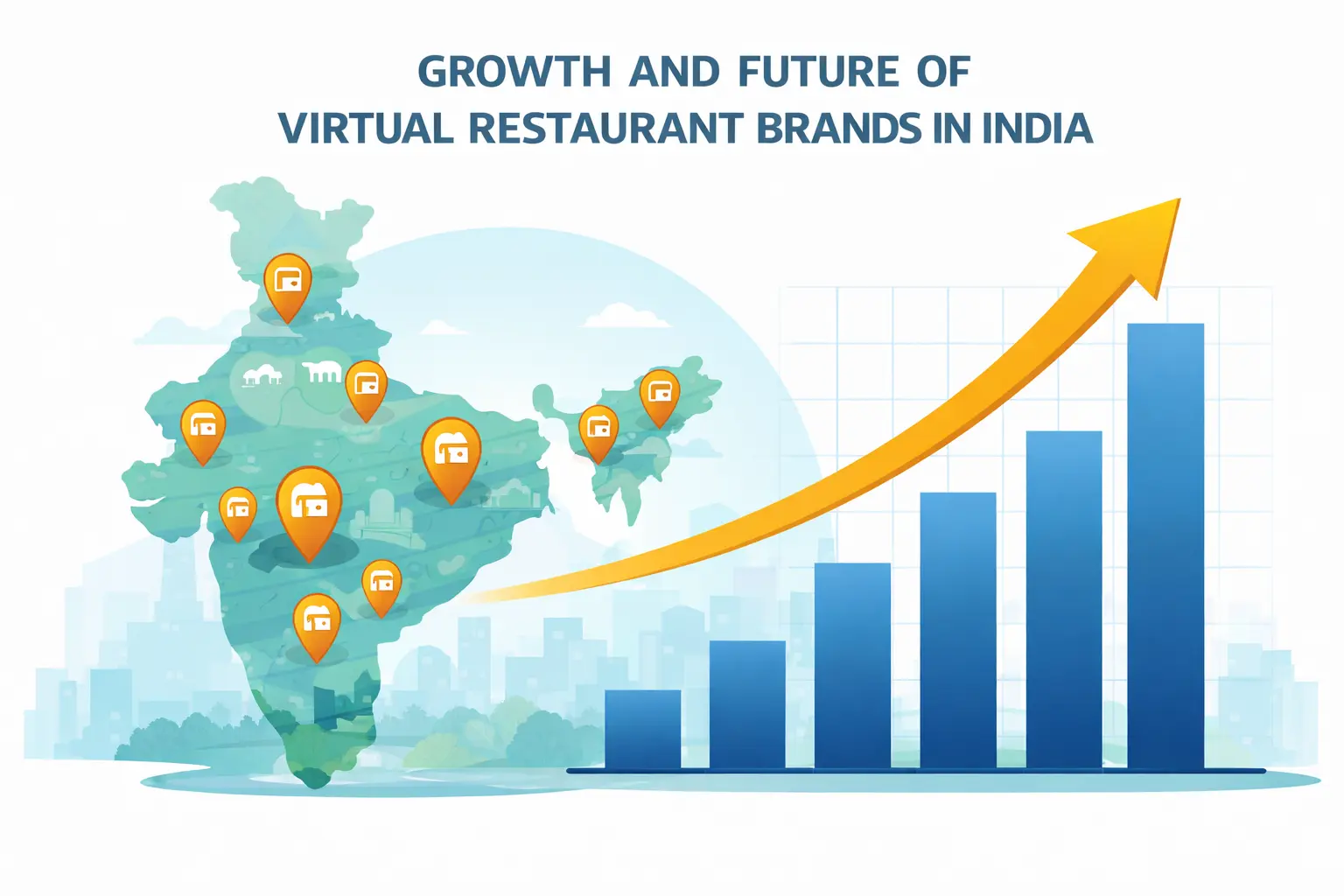
The future of India’s food delivery ecosystem will be increasingly driven by:
Virtual restaurant brands are expected to play a central role in shaping the next phase of growth in India’s F&B industry.
As consumer demand continues to evolve, brands that can adapt quickly, operate efficiently, and deliver consistent experiences will emerge as long-term winners.
Virtual restaurant brands are not just a trend—they represent a fundamental shift in how food businesses are built and scaled in India. By combining cloud kitchen infrastructure, technology, and consumer insights, these brands are redefining the food delivery market.
For entrepreneurs, restaurant operators, and food businesses looking to grow sustainably, virtual restaurant brands offer a powerful, future-ready opportunity.
With platforms like Kouzina Food Tech enabling end-to-end solutions, the virtual restaurant ecosystem in India is poised for continued innovation and expansion.