Virtual kitchens—also known as ghost kitchens or cloud kitchens—are transforming how restaurants operate in the digital age. Unlike traditional restaurants, virtual kitchens don’t have dine-in spaces. They exist solely to prepare food for online delivery and takeout, helping brands reduce overhead, scale faster, and launch multiple food concepts from a single kitchen.
In India and around the world, the surge in food delivery apps like Swiggy, Zomato, and Uber Eats has made this model increasingly attractive. Whether you're a restaurant owner looking to cut costs or an aspiring food entrepreneur exploring scalable models, understanding how virtual kitchens work is key to staying competitive in the modern food industry.
In this guide, we’ll explore what virtual kitchens are, how they differ from traditional setups, the benefits and challenges they present, and how platforms like Kouzina are helping shape the future of delivery-first restaurants in India.
A virtual kitchen, often referred to as a ghost kitchen or cloud kitchen, is a professional cooking facility that operates remotely. It operates solely for delivery and takeout orders.
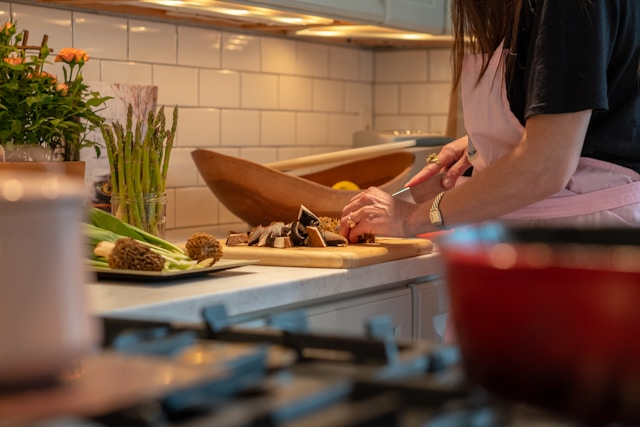
Virtual kitchens do not have a dining area for customers. All orders are placed online, through third-party delivery apps or the kitchen's website. These kitchens are designed entirely for food preparation and efficient order fulfillment.
Virtual kitchens can house one or multiple brands. A single kitchen might prepare food for several different virtual restaurant concepts. This allows operators to diversify their offerings without needing multiple physical locations. The entire operation is streamlined for digital ordering and delivery logistics.
Several converging factors propelled the rapid rise of virtual kitchens. These key drivers explain their significant market proliferation.
The explosion of online food delivery platforms fundamentally transformed consumer behavior. Customers now routinely order food via smartphones.
This shift created immense demand for efficient, delivery-only operations. Virtual kitchens are perfectly positioned to fulfill this need.
Consumers increasingly value convenience and diverse food options over traditional dining. High-quality takeout and delivery became highly desirable.
Virtual kitchens cater directly to these preferences, offering a variety of cuisines delivered straight to the doorstep.
Traditional restaurants face substantial overheads, including high rent, staffing, and utility expenses for dining areas.
Virtual kitchens eliminate front-of-house needs, drastically cutting initial investment and ongoing operational costs. This financial efficiency makes them an appealing business model.
Advances in kitchen technology and order management systems are crucial for virtual operations.
Efficient order routing, inventory management, and data analytics streamline high-volume delivery. These technologies enable smooth workflows within the virtual kitchen environment.
Virtual kitchens come in various forms, each offering distinct advantages. Choosing the right model depends on your business goals and resources.

An entrepreneur might rent a commercial kitchen space to launch several delivery-only concepts. This model offers maximum control and flexibility.
Each business operates its section within the shared space. This model reduces individual setup costs. It also fosters a collaborative environment. Businesses can share equipment and resources.
This allows restaurants to diversify revenue streams. They can experiment with new cuisines without significant additional investment.
It simultaneously operates multiple virtual brands from the same kitchen. This approach caters to different customer preferences. It maximizes operational efficiency.
Also read: Understanding the Concept of Ghost Kitchens in Montreal
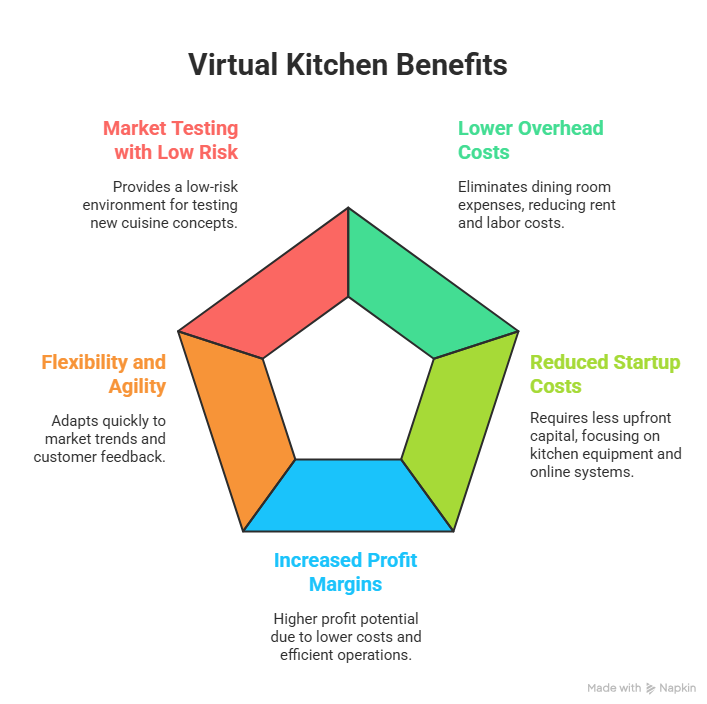
Adopting a virtual kitchen model offers numerous compelling advantages. These benefits directly contribute to increased profitability and flexibility.
The most significant advantage is the drastic reduction in operating expenses. You eliminate the need for costly dining room space, front-of-house staff, and elaborate decor.
This means lower rent, utility bills, and labor costs. Lower overheads translate directly into higher profit margins.
Launching a traditional restaurant requires substantial capital investment. Virtual kitchens require significantly less upfront capital.
You primarily need kitchen equipment and online ordering systems. This lowers the barrier to entry for aspiring restaurateurs.
With lower overheads and startup costs, virtual kitchens inherently boast higher profit potential. A greater percentage of revenue goes directly to your bottom line.
This financial efficiency allows for quicker ROI. It also provides more capital for reinvestment and expansion.
Virtual kitchens offer unparalleled flexibility. You can quickly adapt to market trends or customer feedback. It is easier to introduce new menu items or even entirely new virtual brands. This agility allows for rapid experimentation and innovation.
Want to test a new cuisine concept? A virtual kitchen provides a low-risk environment for market validation.
You can launch a new brand, gather customer feedback, and iterate quickly. If a concept doesn't work, you can pivot without significant financial loss.
Kouzina offers a ground-breaking franchise opportunity for food sector entrepreneurs: virtual restaurants. Our platform, which leverages AI technology and established culinary brands, provides unrivaled flexibility, scalability, and round-the-clock customer support. By joining us, you can focus on your culinary innovation while Kouzina handles the practical details.
Virtual kitchens can reach a larger geographic area by employing delivery platforms. The immediate vicinity of a physical storefront does not limit you.
This significantly expands your potential customer base. It opens up new revenue opportunities.
Online ordering platforms provide rich data insights. You can track popular dishes, peak order times, and customer demographics. This data empowers informed decision-making. You can optimize menus, pricing, and marketing strategies to enhance your business.
Without the distractions of managing a dining room, virtual kitchens can hyper-focus on food preparation. This allows for greater efficiency in the kitchen.
It ensures consistent food quality and faster order fulfillment. The entire operation is streamlined for delivery excellence.
Virtual kitchens offer benefits, but they also present unique challenges that are critical for effective planning.
You also lose control over the customer experience once food leaves your kitchen. Managing these relationships is vital.
Differentiating your offerings effectively is essential. Constant innovation maintains a competitive edge.
Strong digital marketing strategies are essential. Investing in high-quality food photography and compelling descriptions is crucial.
Robust packaging is needed to maintain temperature and presentation. Standardized recipes and strict quality checks are paramount.
Coordinating multiple delivery drivers requires seamless communication and coordination. Delays lead to negative customer experiences.
A robust online customer service strategy is vital. Clear communication channels are essential.
Expanding to multiple locations requires careful planning and consideration. Maintaining quality and consistency across various sites is a significant undertaking.
Exploring franchise opportunities with Kouzina can also help reduce starting and operating expenses by providing an established structure and support.
Launching a successful virtual kitchen requires careful planning and execution. Follow these steps to set up your operation effectively.

Define your culinary niche and target audience. What type of food will you offer? What makes your menu unique? Create a focused menu optimized for delivery. Select food items that travel well and retain their quality.
Outline your business goals, financial projections, and marketing strategy. Include details on your target market, pricing, and operational model. A comprehensive business plan is crucial for securing funding & guiding your decisions.
Select a commercial kitchen space that complies with health and safety regulations. Options include shared commissary kitchens or dedicated standalone spaces. Consider the location for delivery radius and accessibility. Ensure adequate space for your equipment and staff.
Research and acquire all required business licenses and food safety permits. These vary by location. Compliance is non-negotiable for legal operation. Consult local health departments for specific requirements.
Invest in high-quality kitchen equipment suitable for your menu. This includes ovens, fryers, refrigeration units, and prep tables. Prioritize efficiency and durability. Consider specialized equipment for high-volume production.
Set up your online ordering system, either through third-party platforms or your website. Integrate with delivery services. Implement a kitchen display system (KDS) for efficient order management. Consider inventory and analytics software.
Recruit skilled kitchen staff who can handle high-volume, delivery-focused production. Train them on food preparation, quality control, and hygiene standards. Emphasize efficiency and consistency in all processes.
Invest in high-quality, durable, and insulated packaging. Packaging must maintain the food's temperature, prevent spills, and present the food in a visually appealing manner. Consider sustainable packaging options where possible. Good packaging enhances the customer experience.
Develop a robust digital marketing plan. Utilize social media, online ads, and influencer collaborations. Focus on high-quality food photography. Encourage customers to leave reviews and engage on delivery platforms.
Soft launch your virtual kitchen to test systems and gather initial feedback. Continuously monitor sales data, customer reviews, and operational efficiency. Make data-driven adjustments to your menu, pricing, and marketing. Iterate and improve over time.
Read more: Cloud Kitchen Market Size, Growth, and Trend Analysis\
Effective marketing is crucial for virtual kitchens that lack a physical storefront. Your digital presence is your brand's face.
Starting a virtual kitchen is easier when you have the right systems behind you. Kouzina, a leading food tech company, specializes in cloud kitchen operations and franchise enablement across India. With brands like WarmOven, Indiana Burgers, KaatiZone, and Cupcake Noggins, Kouzina runs multiple delivery-first brands from unified kitchen hubs.
Here’s what Kouzina brings to the table:
Whether you're an aspiring food entrepreneur or an existing operator looking to expand, Kouzina offers a plug-and-play model to enter the virtual kitchen space with speed and efficiency.
Ready to launch your own cloud kitchen with trusted brands? Get in touch with Kouzina now.
The future of virtual kitchens looks promising. As the demand for food delivery continues to rise, the virtual kitchen model is poised for expansion across India and globally.
With the ability to scale quickly, experiment with different concepts, and reach customers through multiple delivery platforms, virtual kitchens offer significant potential for entrepreneurs.
Moreover, advancements in food technology and logistics, combined with an increasing reliance on online food delivery by customers, will further enhance the effectiveness of virtual kitchens.
As more restaurants adopt this model, we can expect to see increased competition & innovation in the cloud kitchen space, making it an exciting time to get involved.
Virtual kitchens are reshaping the restaurant industry, providing a flexible, cost-effective entry into food delivery. They offer reduced overheads, a low barrier to entry, and potential for concept testing, appealing to both entrepreneurs and established brands.
Despite challenges such as platform dependence and quality control, the benefits often outweigh the drawbacks for owners. As the industry evolves, virtual kitchens will increasingly influence the future of foodservice.
If you have various culinary concepts in mind, a multi-restaurant cloud kitchen enables you to manage them all from a single location. Kouzina operates several food businesses, including well-known names such as Indiana Burgers and WarmOven, which are also available for franchising.
1. What exactly is a virtual kitchen?
A virtual kitchen is a commercial kitchen optimized for delivery and takeout only. It has no dine-in area and operates through online food platforms or direct orders.
2. Do I need a storefront or restaurant space to start a virtual kitchen?
No. You can operate from a shared kitchen or standalone facility solely focused on fulfilling delivery orders.
3. Can I run more than one brand from the same kitchen?
Yes. Many virtual kitchens run multiple food brands from a single location, maximizing efficiency and market reach.
4. What are the legal requirements to start a virtual kitchen in India?
You’ll typically need an FSSAI license, GST registration, health department approval, and a commercial kitchen agreement.
5. How do virtual kitchens manage deliveries?
They either partner with aggregators like Zomato/Swiggy or build direct ordering systems with their own delivery fleet.
6. Is the virtual kitchen model profitable?
Yes, due to lower overhead costs and scalability. However, profitability depends on brand differentiation, order volume, and operational efficiency.